What You Pay
We don't post flat prices here because a roller job depends on what's actually on the track - nylon, steel, or the original 7-ball steel rollers that came with a lot of Fisher's 1974-era construction. What we can tell you is what drives the cost up or down: how many of the ten rollers on a double door need swapping, whether the track itself is grooved or bent from years of dry steel riding on steel, and whether the bottom brackets are rusted enough to need replacing along with the rollers.
Fisher's median household income sits at $92,697, well above the $81,703 median across the rest of our service area, and that matters here specifically because most owners in this price range ask for the upgrade - sealed nylon rollers with permanently lubricated bearings - rather than a like-for-like steel swap that just repeats the same wear cycle in a few years. We quote the job on site, not over the phone, because we can't see your track condition from Champaign.
Why This Fails Locally
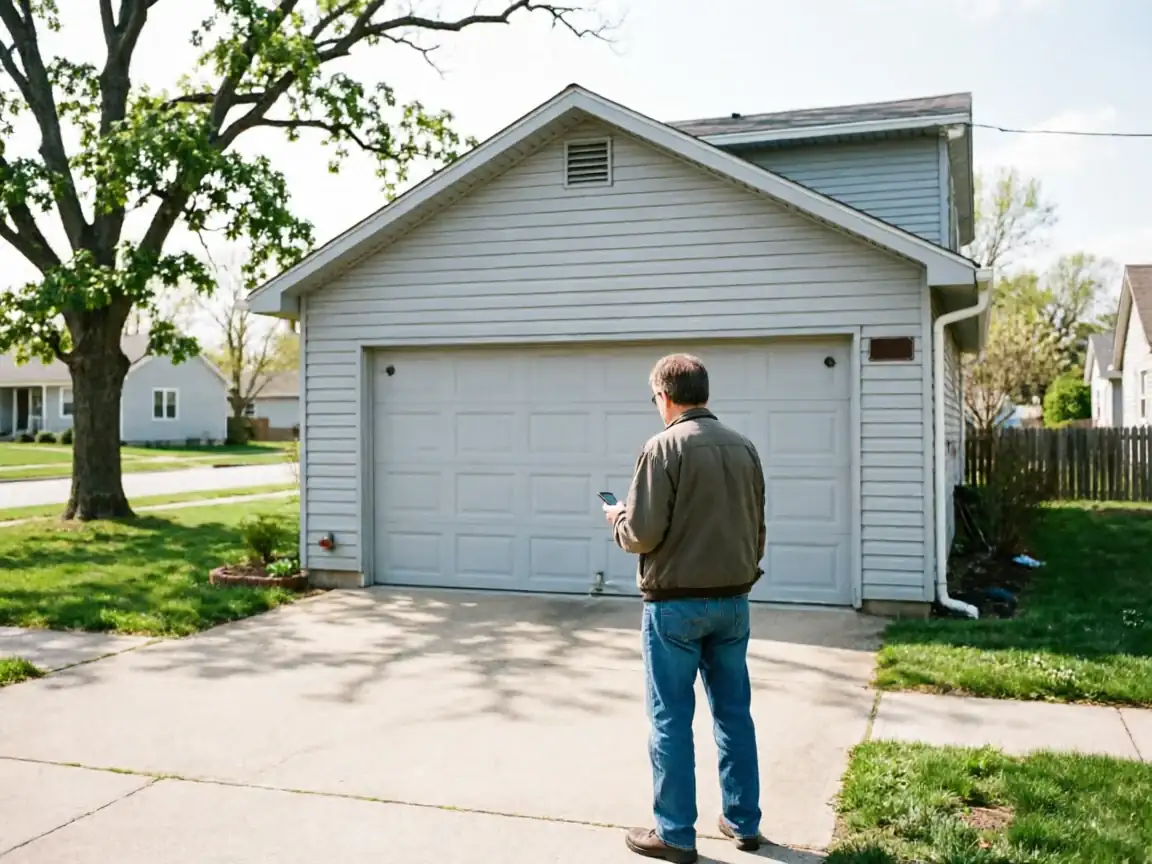
Fisher's housing stock centers on 1974, a few years ahead of the 1978 median across the broader service area we cover. That earlier build date means more of Fisher's garage doors still carry their original steel rollers on open steel track - no sealed bearings, no factory nylon, just bare metal that needs grease to move quietly.
The region sits in a cold, moderate climate band, and that combination is the actual failure mode: grease on open steel rollers dries out and thickens in cold weather, and a thickened, grit-caught roller doesn't roll so much as grind against the track. Over a few winters that grinding wears a groove into the track rail itself, which is a different and more expensive repair than a roller swap. A house in a newer part of our service area, built closer to 2000 with factory nylon rollers, doesn't have this problem nearly as often - this one is tied to Fisher's own era of construction, not garage doors in general.
Doing It Yourself
Swapping the rollers on the bottom two panels of a garage door is a reasonable DIY job
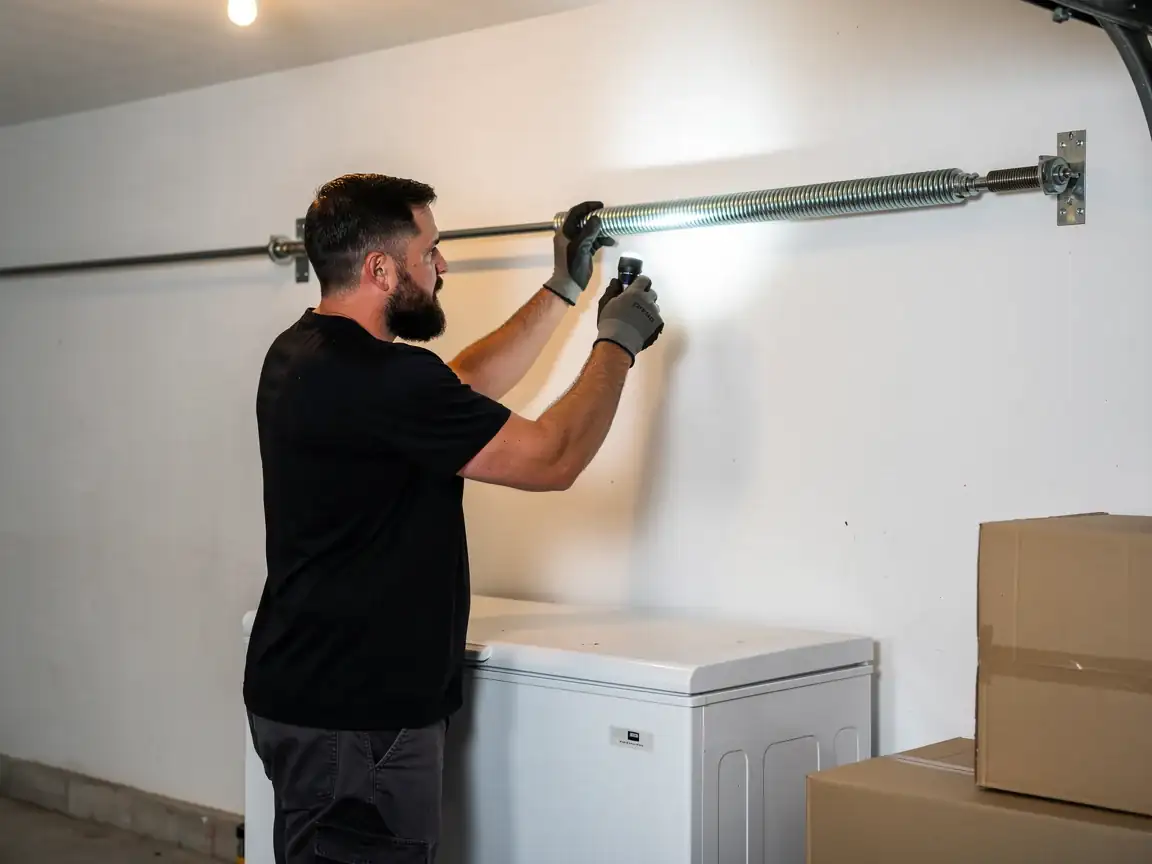
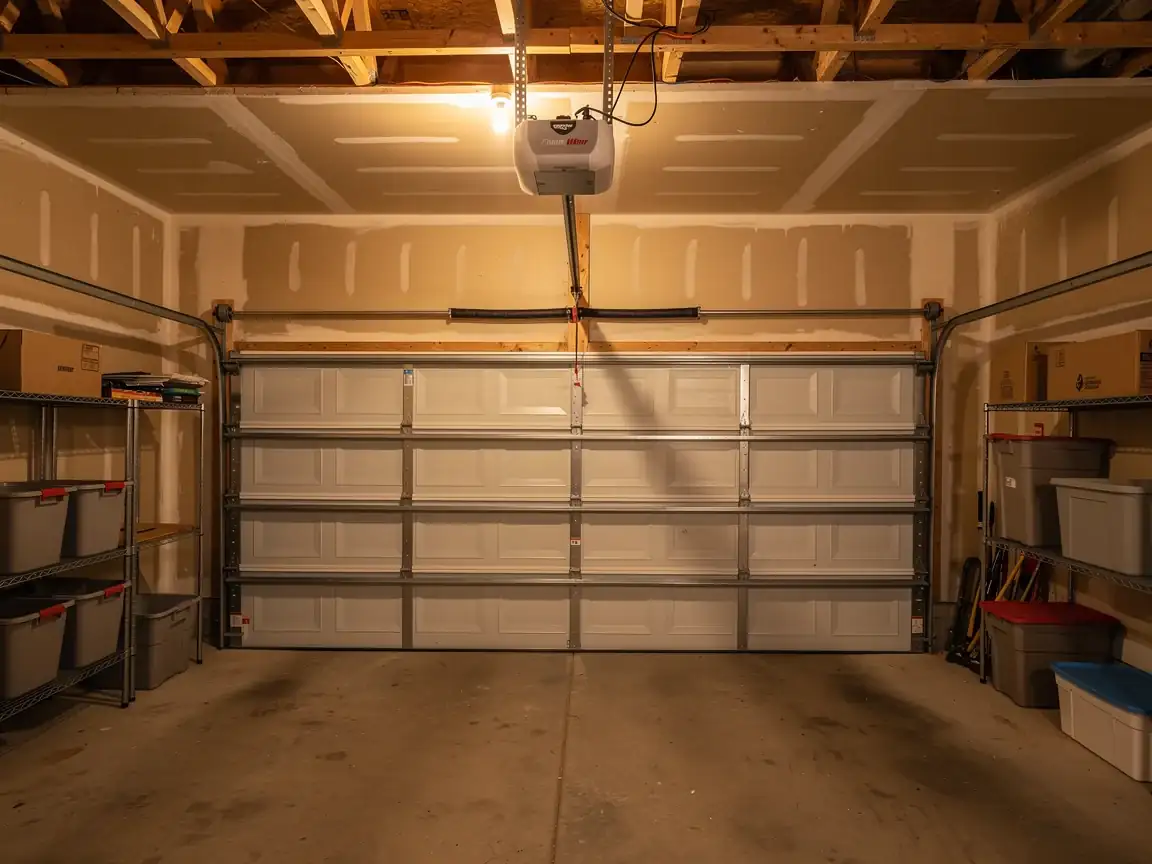
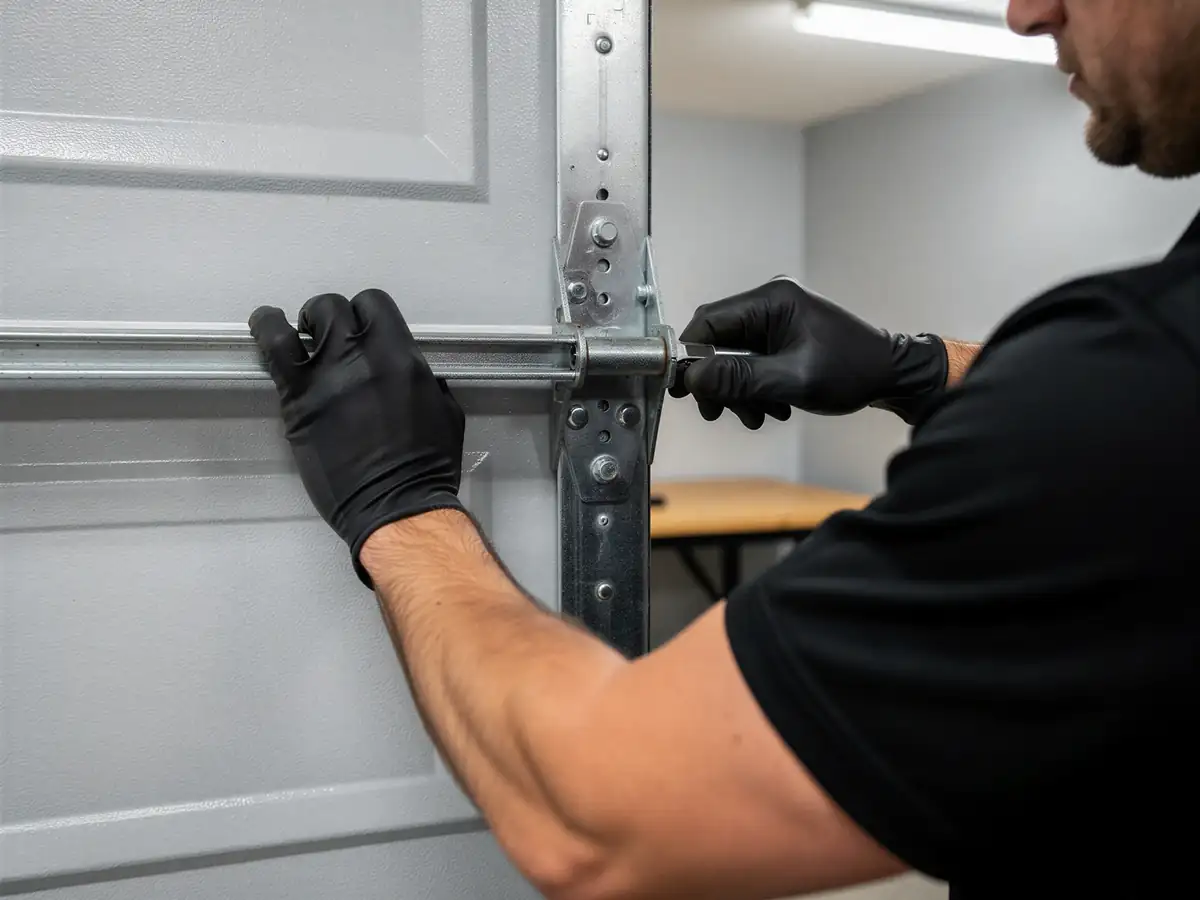
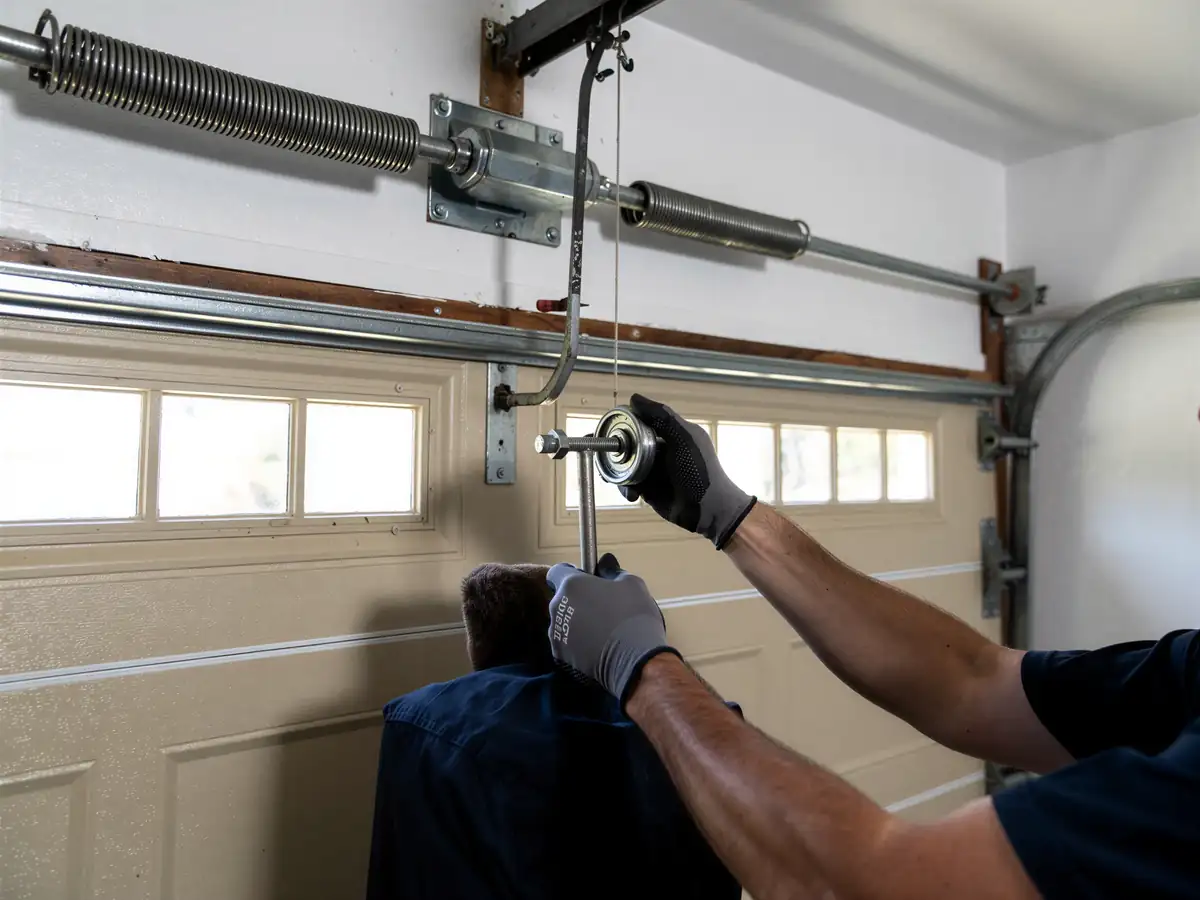
Pull the hinge pin, slide the old roller out, slide the new one in, no spring involved. The honest limitation is the top rollers and the ones nearest the torsion spring assembly. Those sit under tension from the spring and cable system, and working around them without the right clamps is how people lose fingers, not figuratively.
If your Fisher house still has its original 1974-era steel rollers
Also check the track for grooving before you buy parts. A new roller riding in a worn groove will still grind, and you'll have spent money solving the wrong half of the problem. If the track shows a visible channel worn into the rail, that's a track replacement, not a roller swap, and it's worth having someone look at it in person rather than guessing from a parts store aisle.
The Symptom
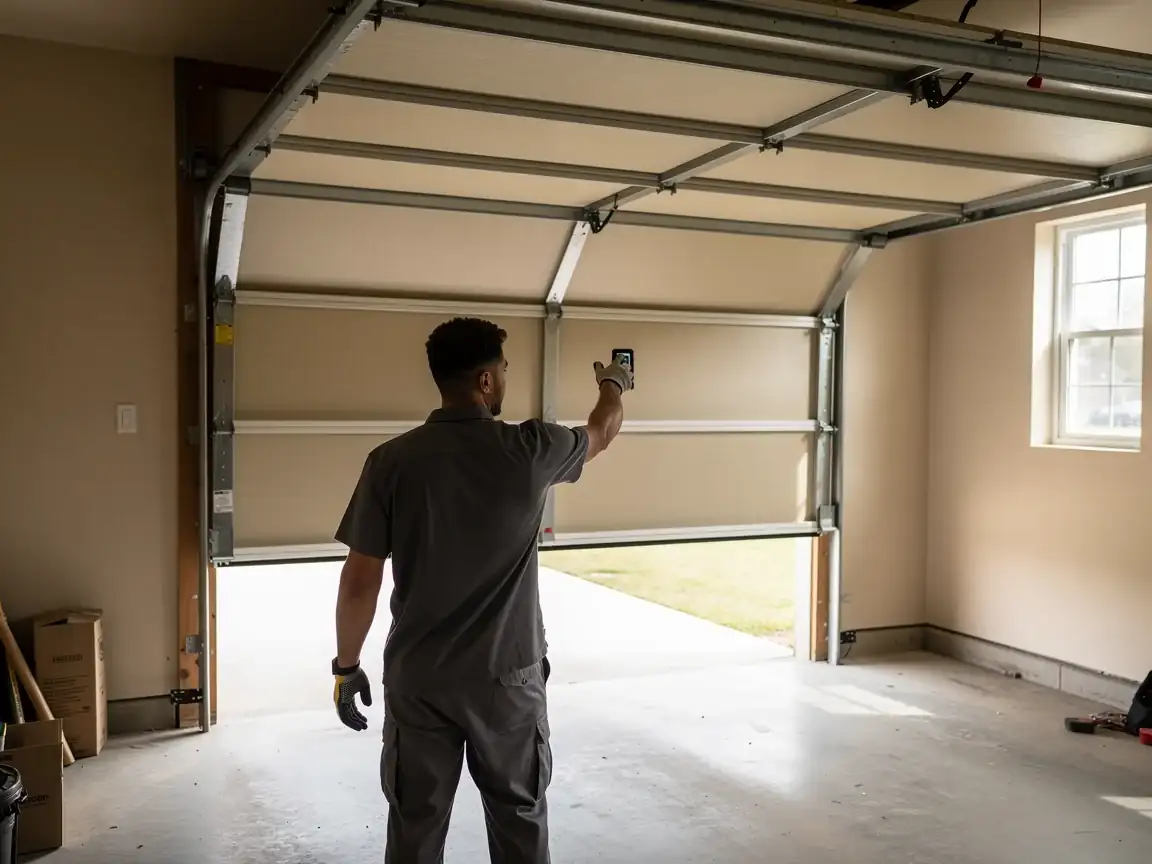
The complaint we hear from this area is consistent: a grinding or rattling noise that gets louder as the door travels, worse in cold months, sometimes bad enough that the door hesitates or jerks partway up the track. That pattern lines up with Fisher's building era - original steel rollers, dried-out grease, cold weather making the drag worse.
It's different from the symptom you'd expect on a newer door with factory nylon rollers, which tends to fail quietly - a roller simply seizes or a bearing goes, with no gradual grinding buildup first. If your door in Fisher has been getting noisier over months rather than failing suddenly, that's steel-on-steel wear, and it's a roller and track inspection, not an opener problem, even if the noise seems to come from overhead near the motor.
What Can Go Wrong
Left alone, worn steel rollers in an open track don't just get louder - they start chewing a groove into the rail, and once that groove is deep enough, new rollers (steel or nylon) will still catch and bind in it. At that point you're replacing track sections, not rollers, and that's a bigger job with more parts and more labor.
The other failure mode specific to older steel rollers is a stem that rusts through at the bracket, which can let a roller drop out of the track entirely while the door is in motion. On a 1974-era door with original hardware, that's not a remote possibility after fifty years of use - it's close to due. We'd rather catch it during a roller swap than get a call about a door that's come off its track.