What to Check
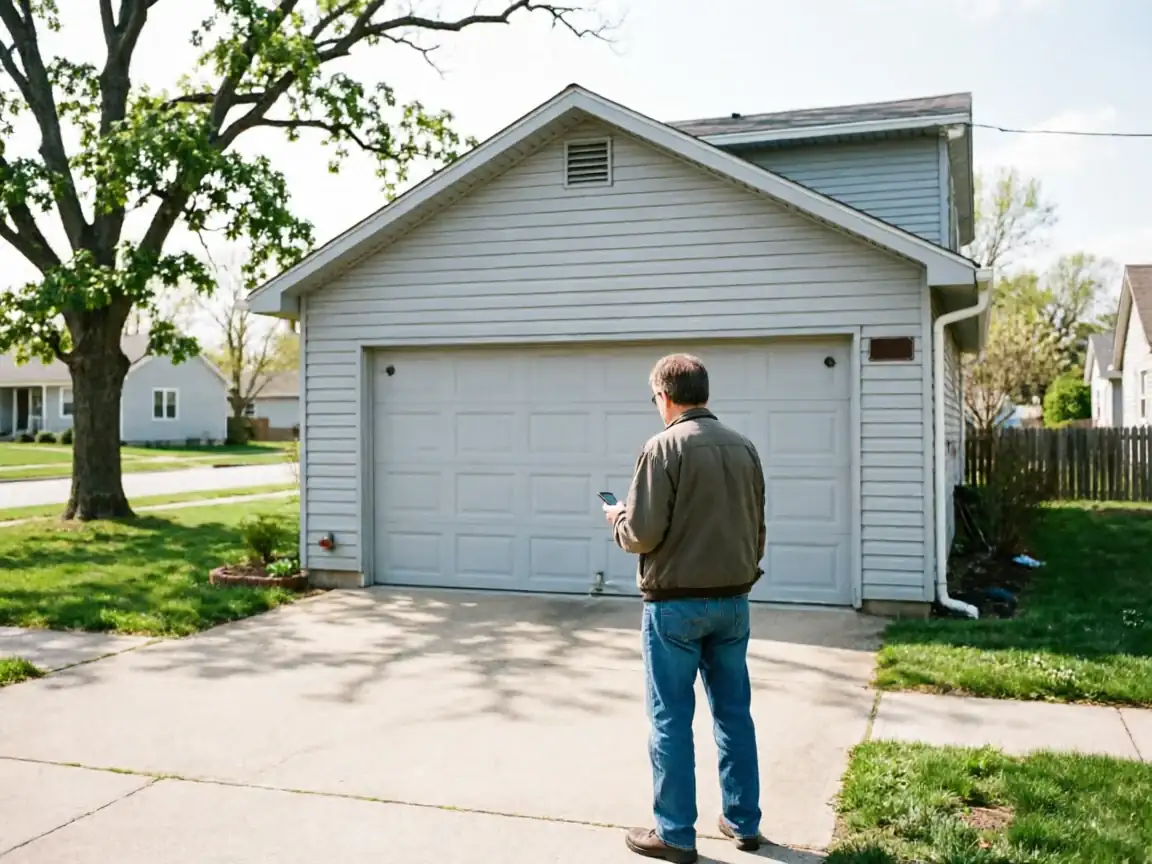
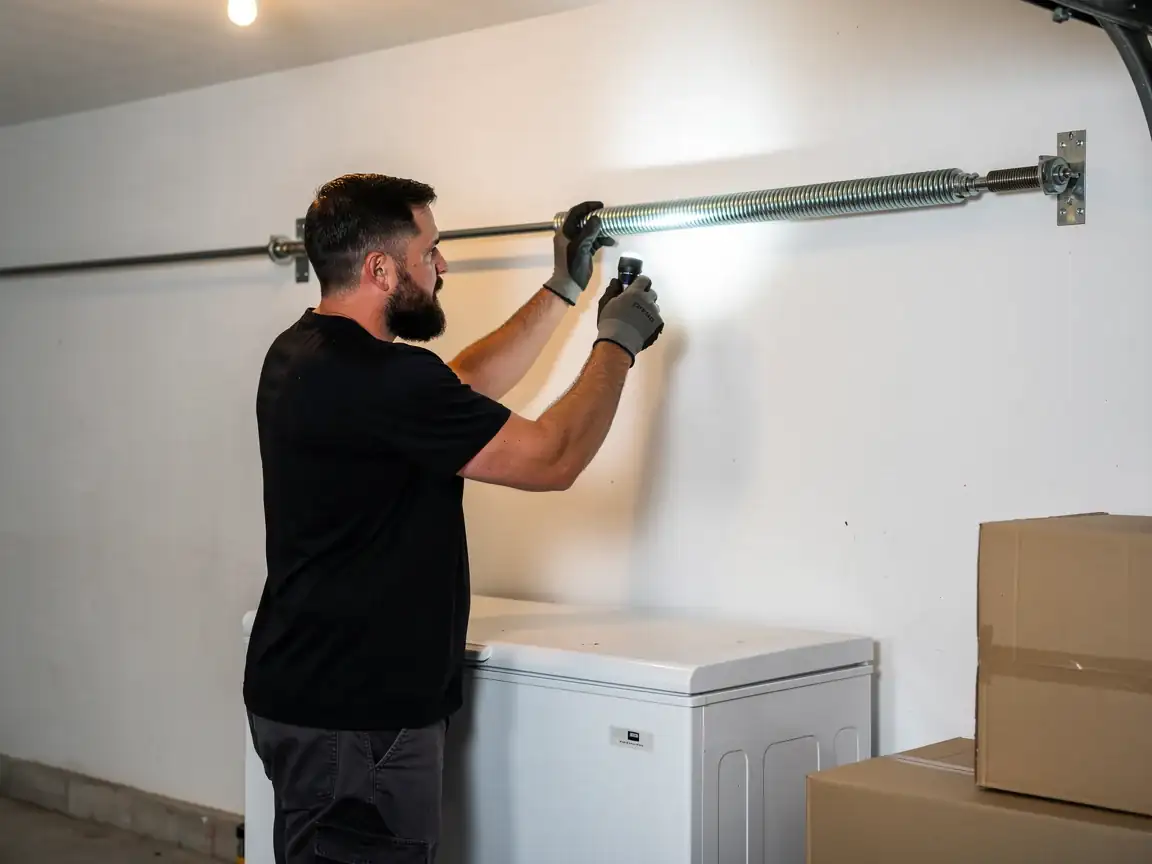
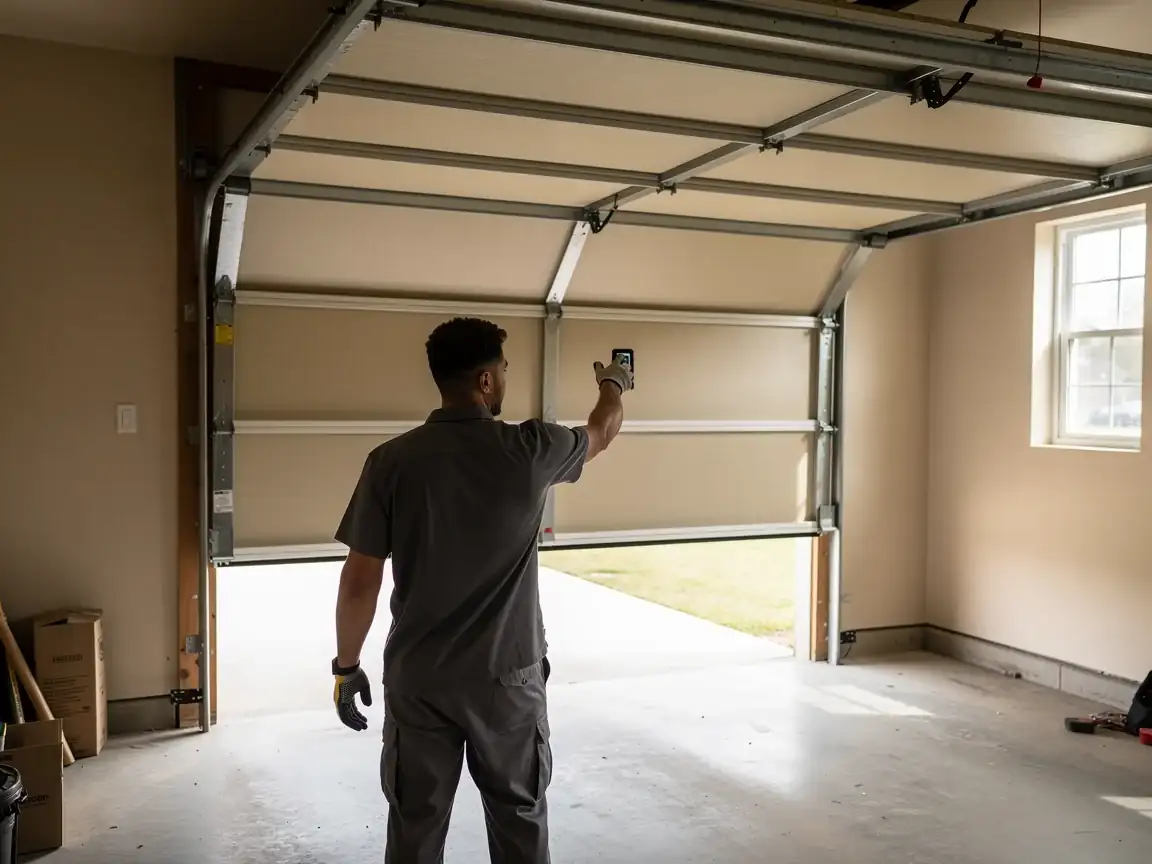
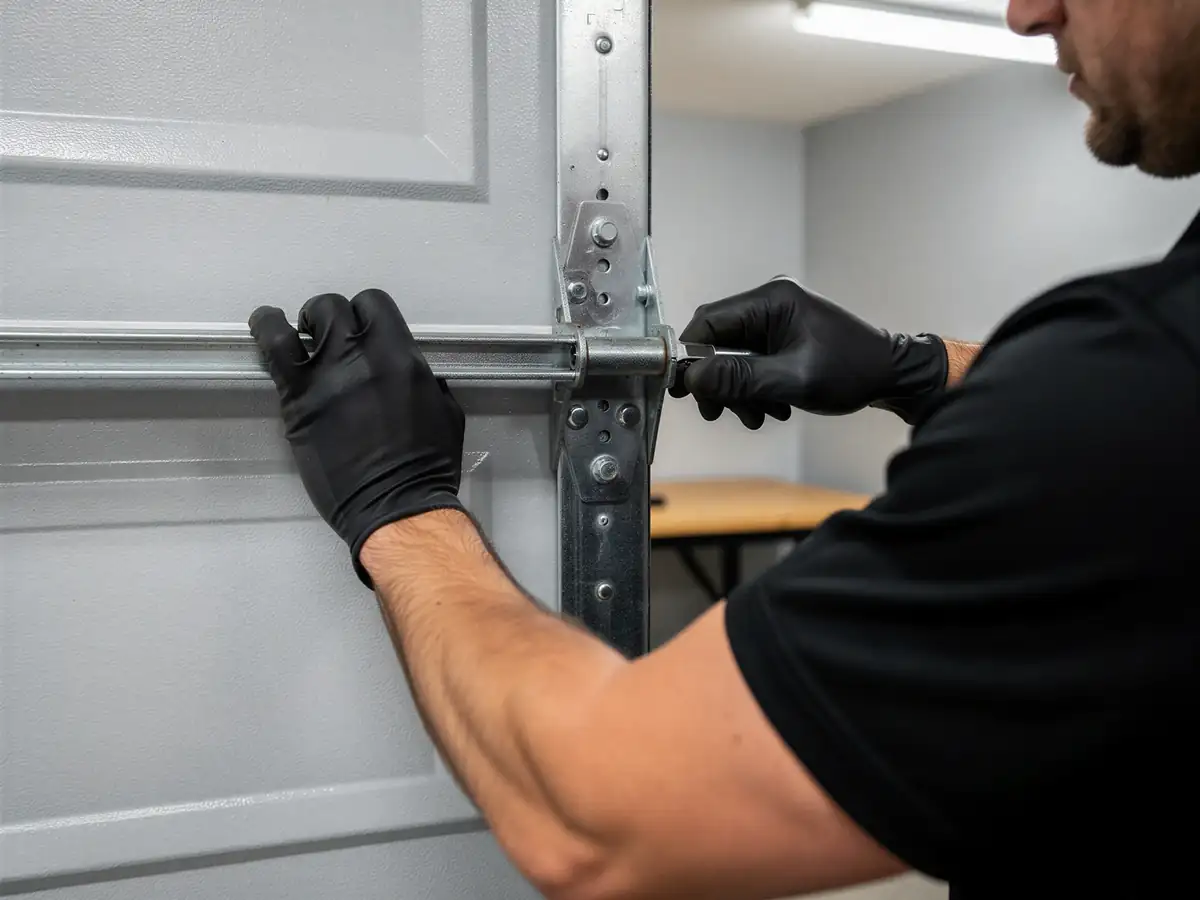
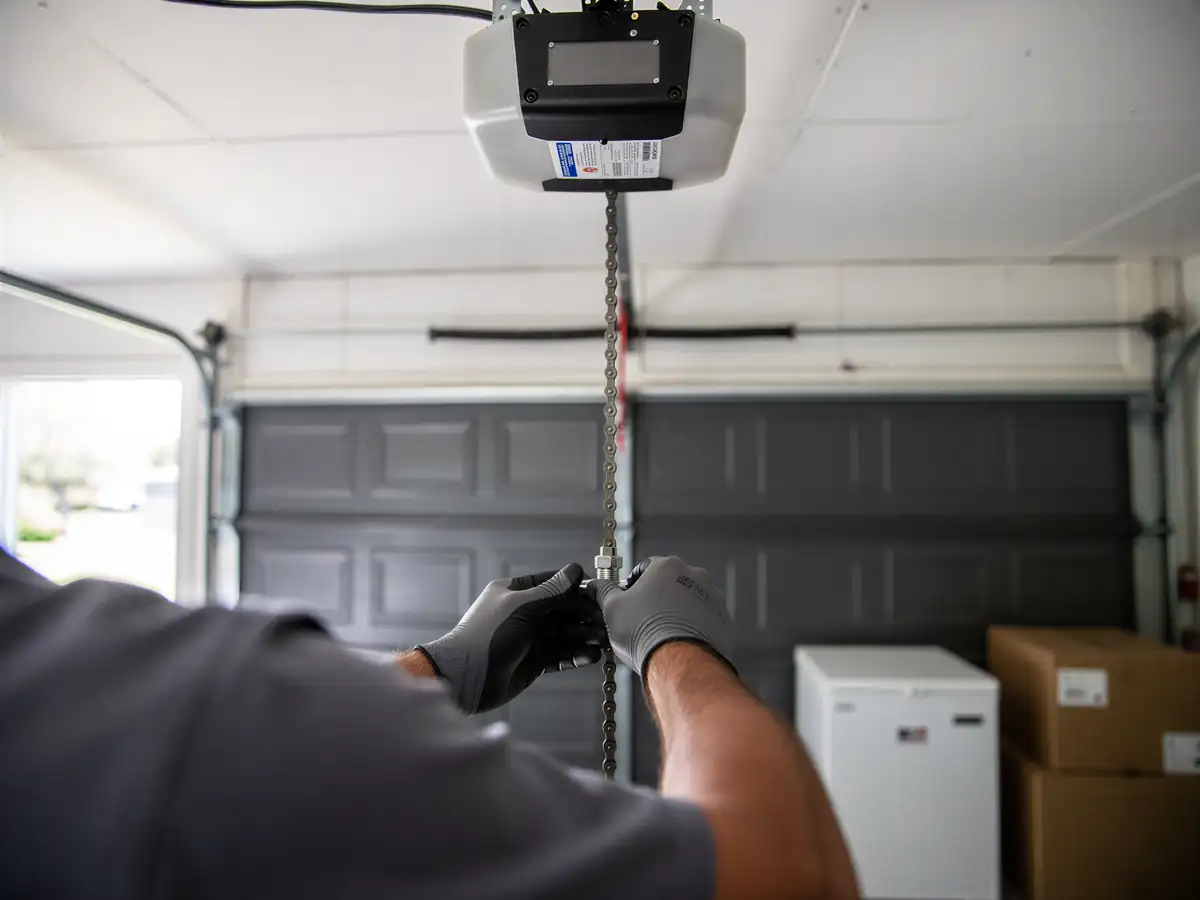
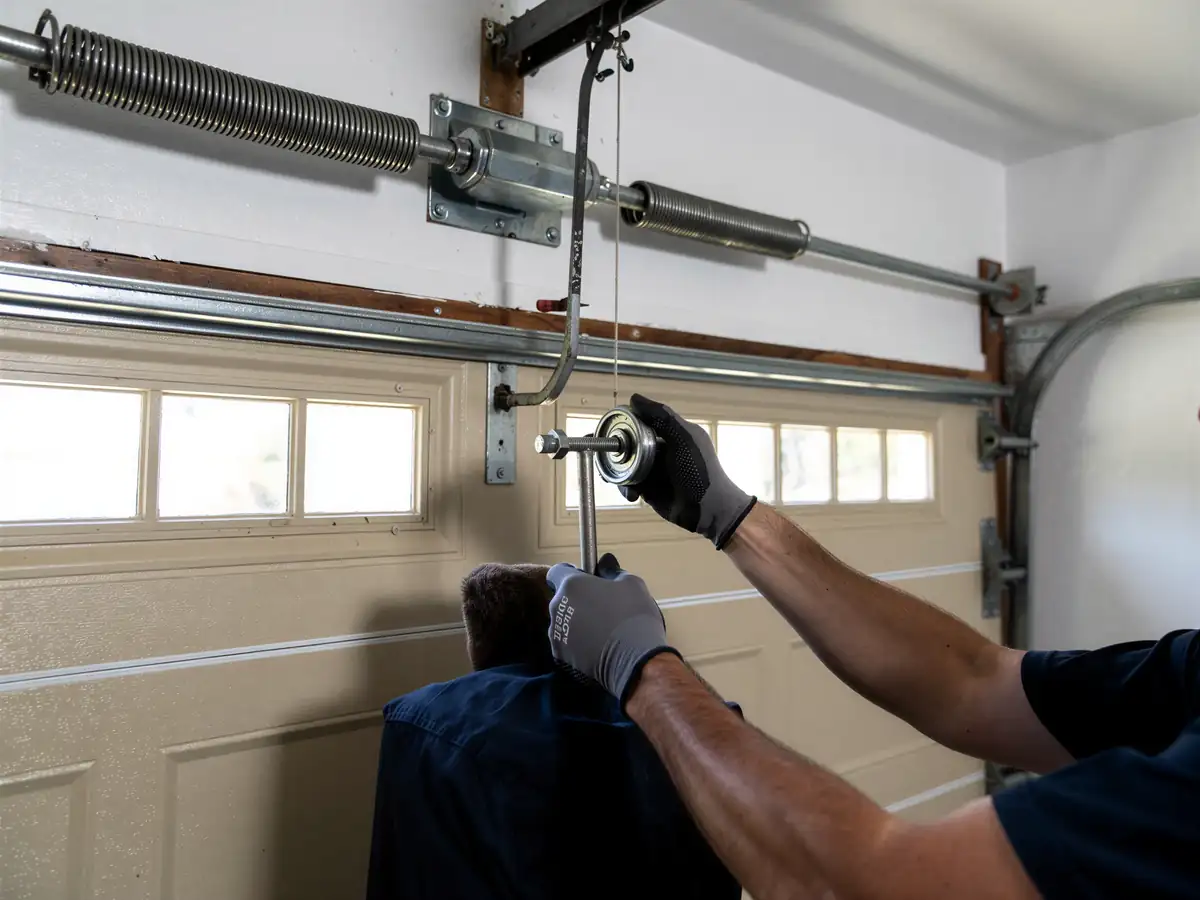
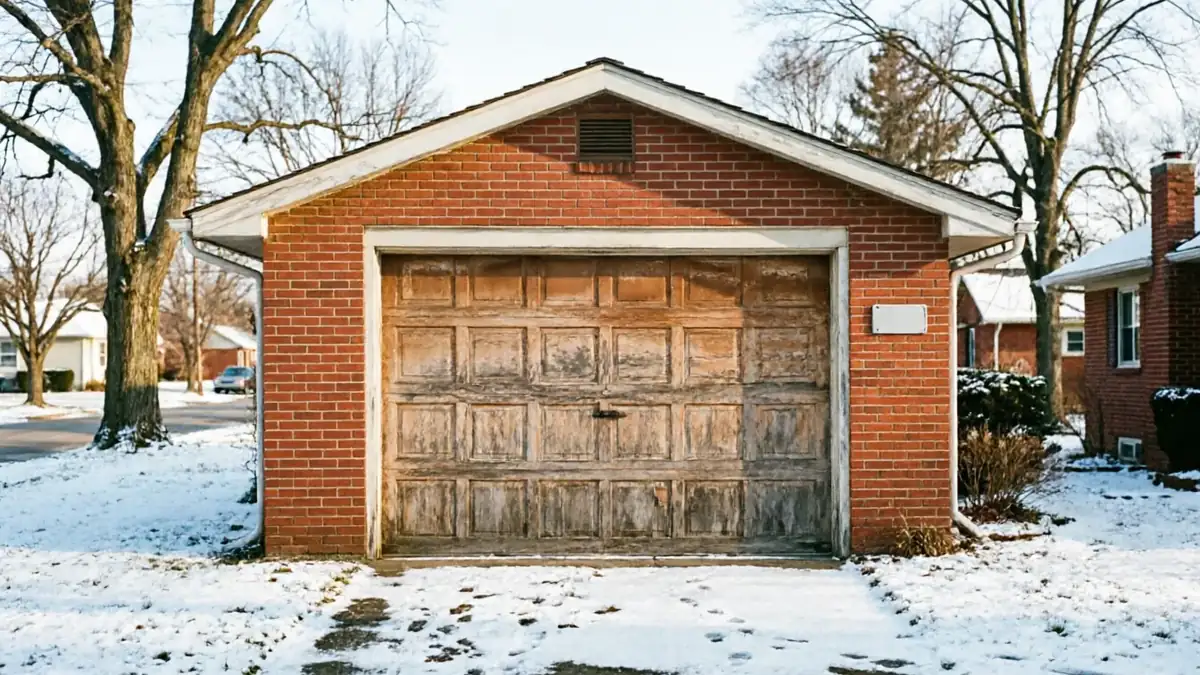
If your house in the Champaign area went up between 1956 and 2000, and the median around here lands close to 1978, you probably have at least one piece of original hardware on that door. Start with the spring. A torsion spring sized for a 1970s steel door often isn't the same part a supply house stocks today, so if it's original, that's reason enough to call before it lets go on its own. Next, the track: look at the brackets where it bolts to the jamb. Rust bloom and hairline cracks show up first at bolt holes on doors that have been through decades of winters. Check the panels themselves. If the door is wood, common on houses from the older end of this range, press a thumb into the bottom rail - soft wood there means moisture has been getting in for years, not months. On steel doors, look for bubbling paint along the bottom panel, which usually means the galvanized coating failed first. Last, the opener: a chain-drive unit from that era will sound different than it did new, and worn gears often grind before they fail outright. None of this tells you to replace the whole door. It tells you which part is closest to done.
What You Pay
We can't give you a number that means anything without seeing the door - a broken spring job costs nothing like a full replacement, and a warped wood panel from a 1960s build might need the whole section remade or sourced, which is a different job than swapping a roller. What we can tell you is what drives the decision here. With median household income in the service area around $81,703, most owners we talk to can cover either repair or replacement without much strain, so the choice usually comes down to age and condition rather than what's affordable. An older torsion spring or worn track on a door that's otherwise sound is almost always cheaper to fix than replace. A door with rotted wood panels, rusted-through skin, or a seized opener is a different conversation - at that point you're often paying for a repair that buys a year before the next part fails. One honest limitation: we don't carry parts for every obsolete track width or hinge pattern from houses built in the 1950s and 60s, and sometimes the lead time on a matching part runs longer than just moving to a new door.
What Is Going On
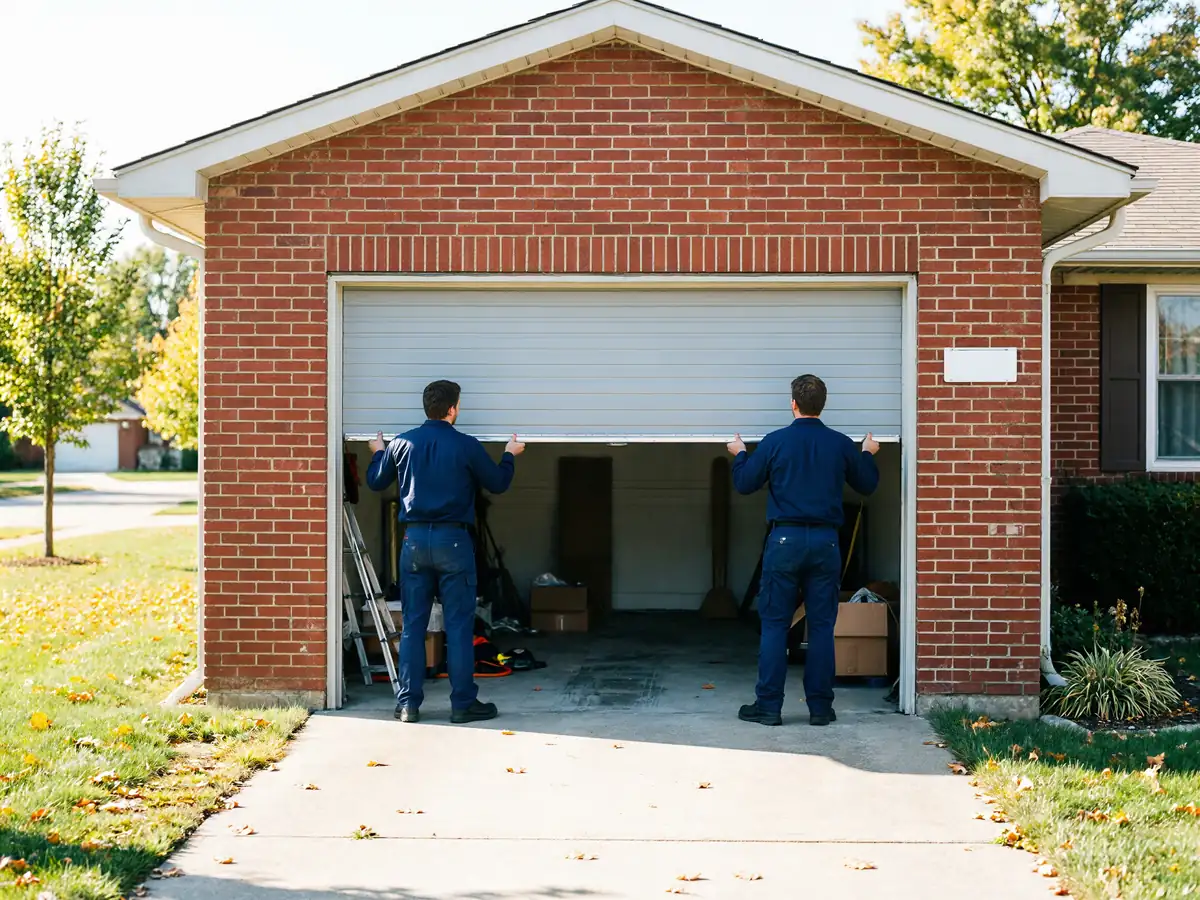
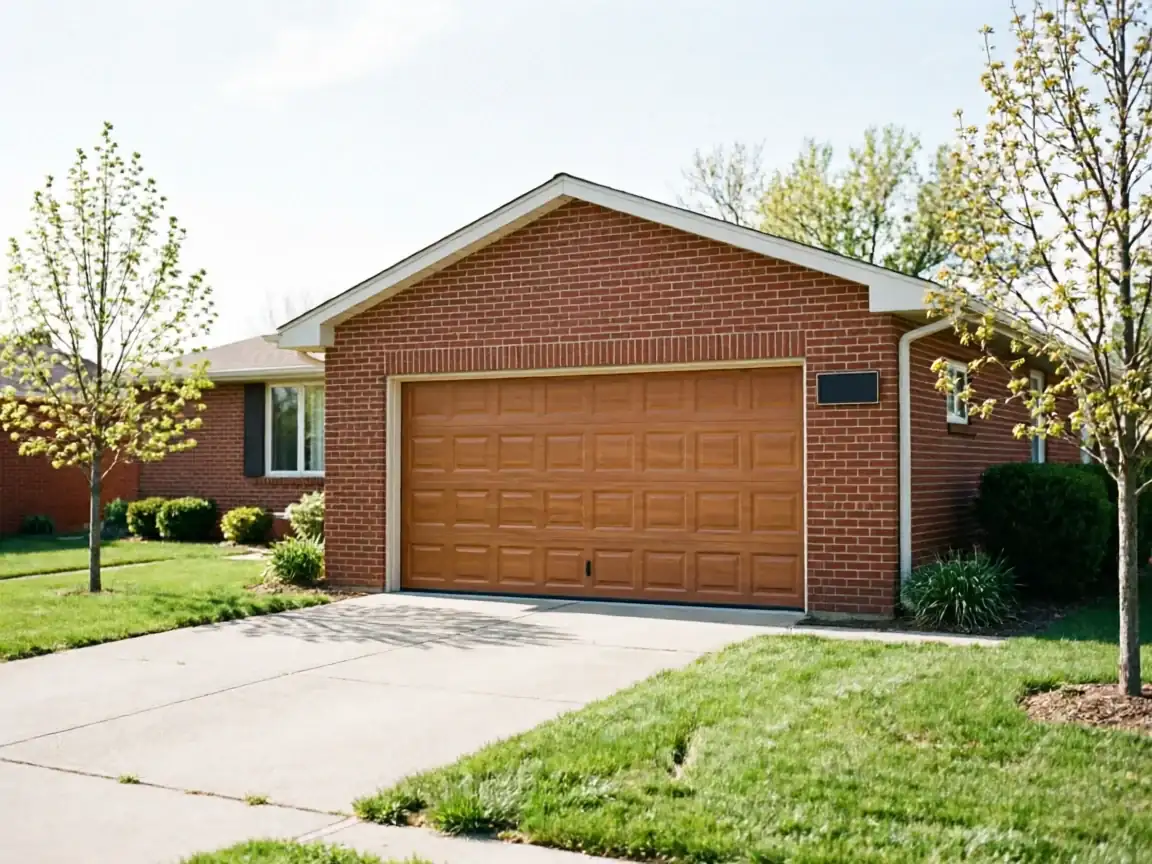
Put it together and the pattern in the Champaign area is pretty clear. A lot of the housing stock here, including the twelve communities we see work in from Savoy and Urbana a few miles out to Monticello and Villa Grove further south, was built across a long stretch from 1956 to 2000, with most of it landing in the 1960s and 70s. That means thousands of doors in this area are old enough to be on original springs, original track, and in some cases an original opener. With 36,992 households and over 13,000 owner-occupied houses in the service area, that's not a small number of doors due for the same decisions around the same time. The honest answer to whether it's worth fixing usually comes down to how much of the door is original and how it's held up through the climate here - cold winters and the freeze-thaw cycling that comes with them. A door with one failed part and a sound frame is worth fixing. A door where the spring, track, and panel are all showing their age at once is telling you something, and at that point a repair is a delay, not a fix.