What to Check
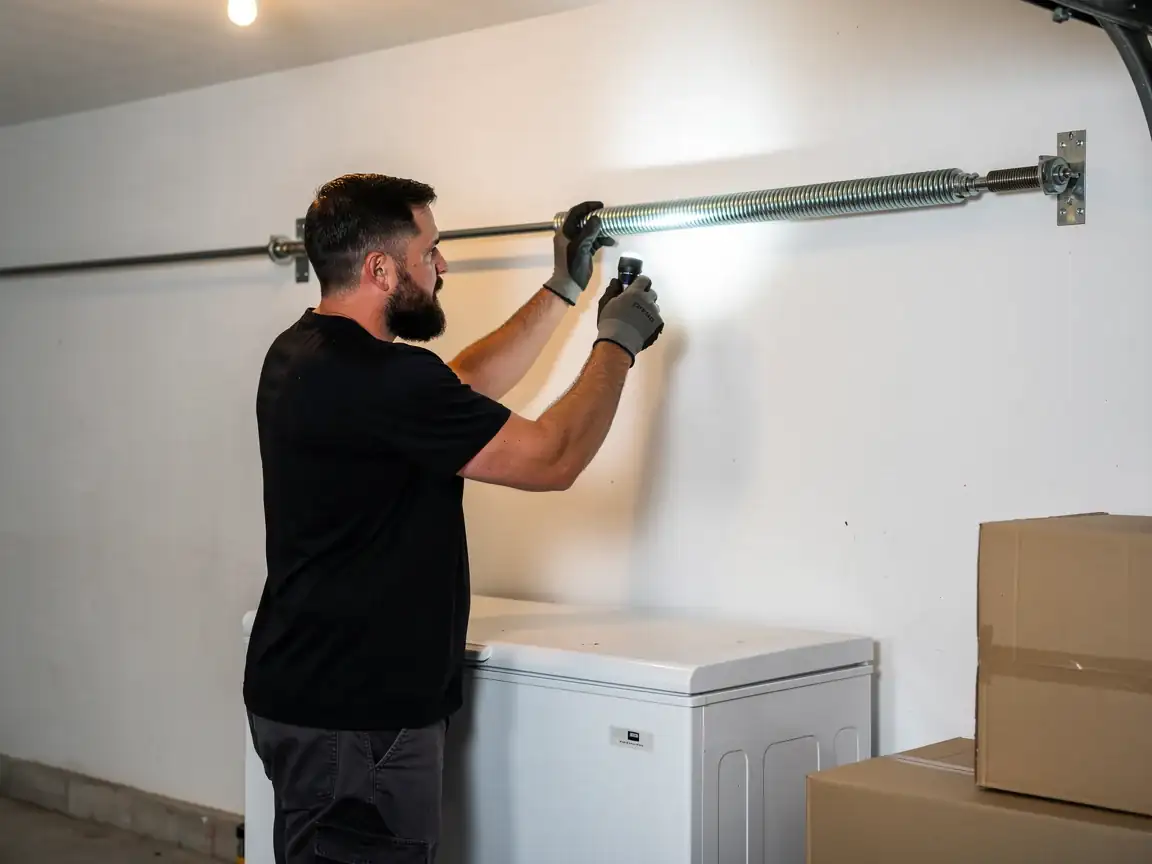
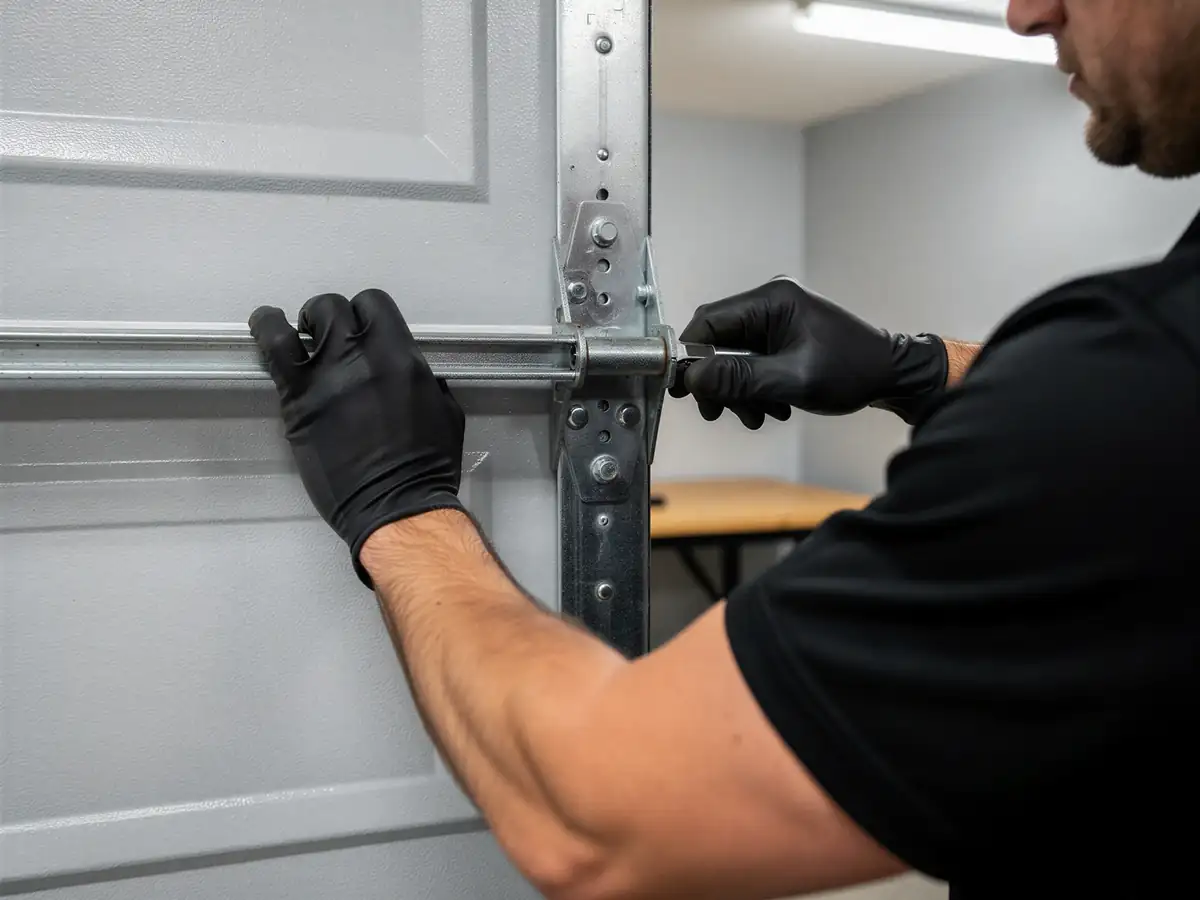
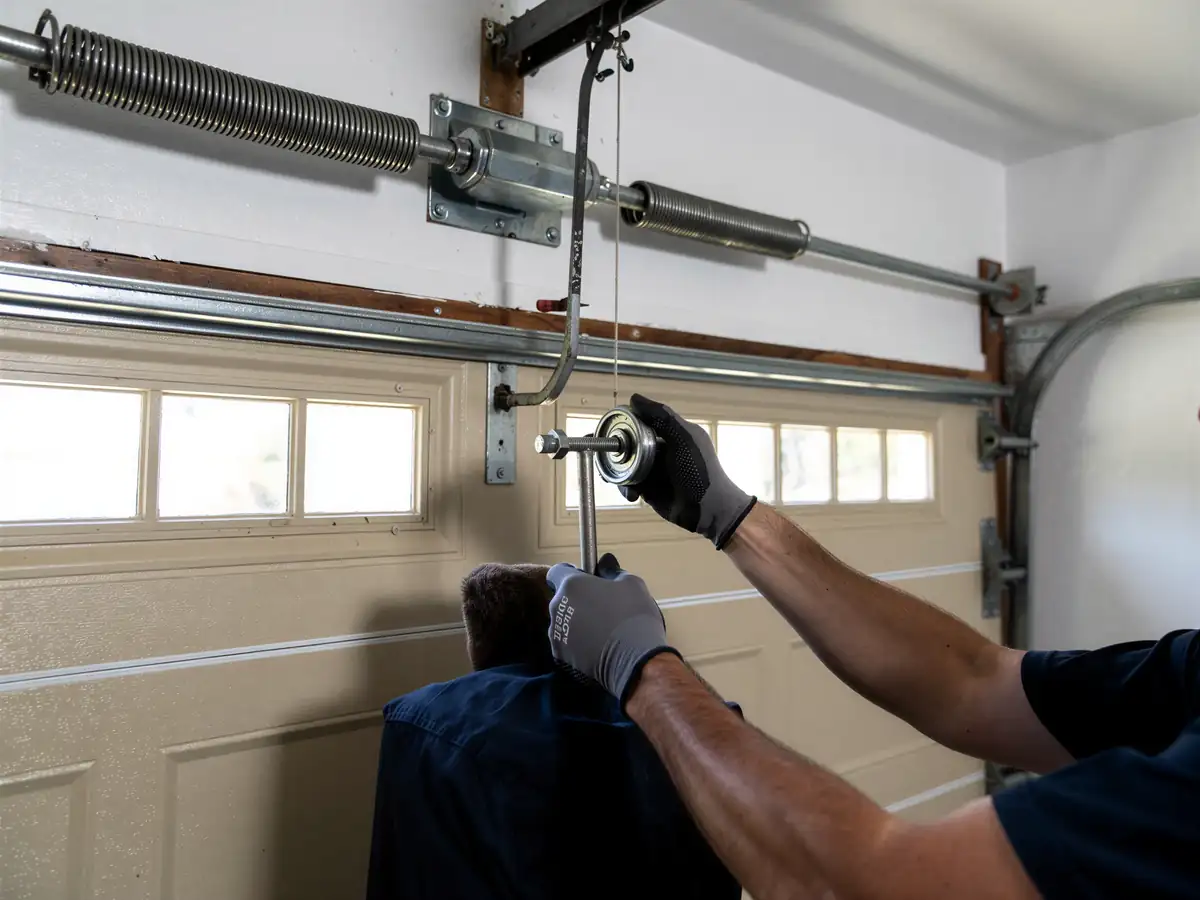
If the door won't lift, or it lifts a few inches and stops, look at the spring above the door before you touch anything else. On a torsion spring, you're looking for a visible gap in the coil - a clean break usually shows as a 1-2 inch split with the two ends twisted away from each other. On older extension-spring setups, still common on houses from the 1960s and 70s stock that makes up most of this service area, check both springs along the horizontal tracks, since one can go while the other still holds tension and masks the problem.
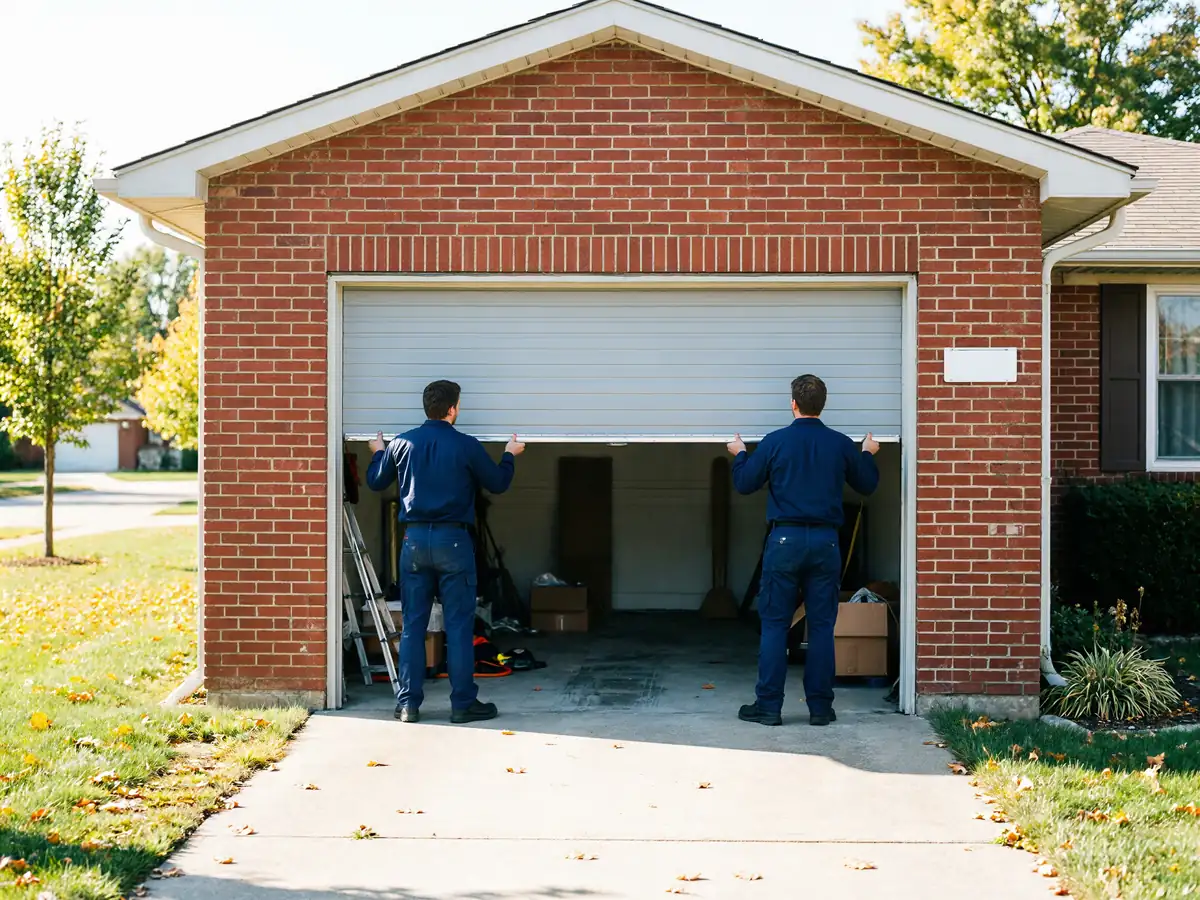
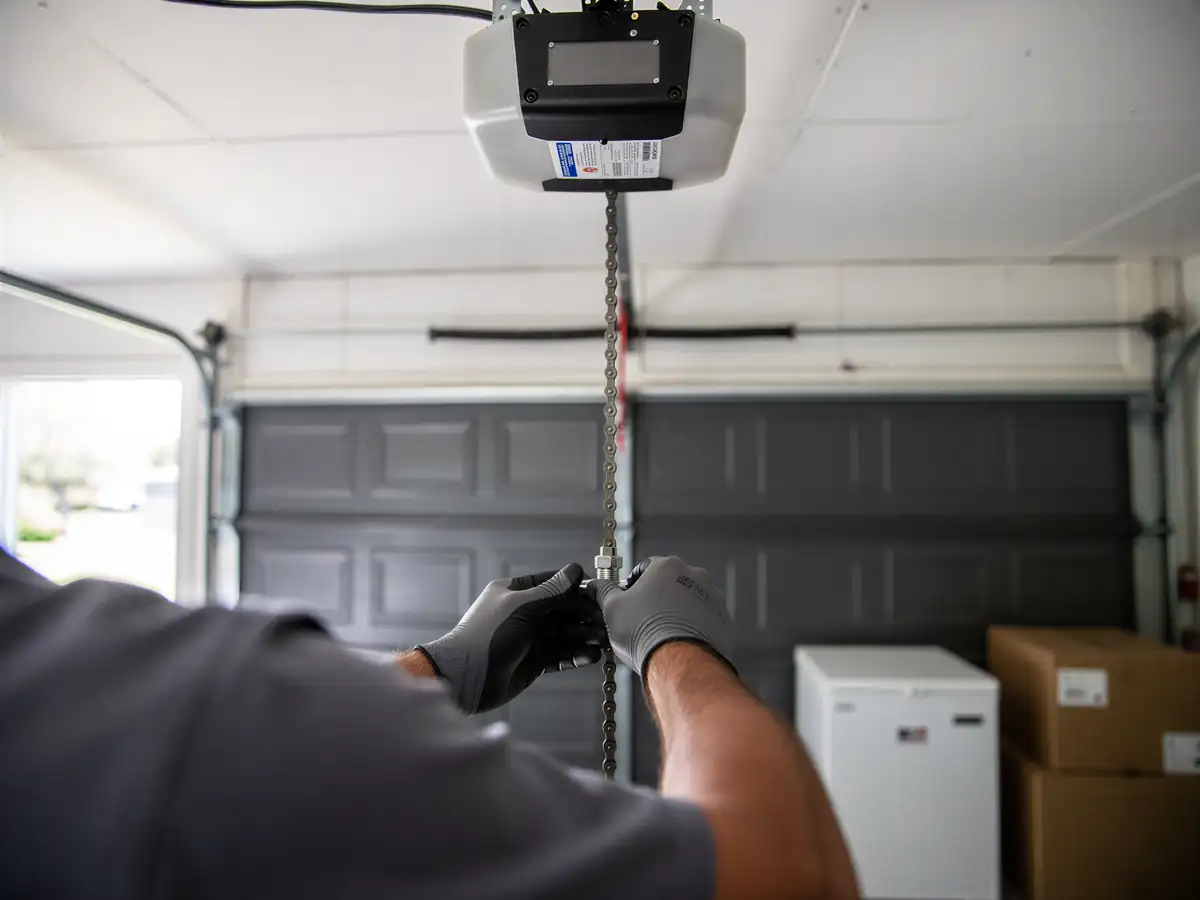
Do not disconnect the opener and try to force the door by hand if a spring has broken. The opener motor isn't built to lift the full weight of a door alone, and neither is a person, especially on heavier doors common in houses built before 1980 with solid wood or early steel panels. Check also whether the cables on either side of the door look loose or frayed near the bottom bracket - a spring failure under load sometimes takes a cable with it. If you see a cable off its drum, stop and call. That's not a DIY fix regardless of how simple the spring looks.
What You Pay
We don't have a flat number to quote here, and anyone who gives you one over the phone without seeing the spring size, door weight, and track condition is guessing. Cost depends on whether the door needs one spring or two, the spring's wire gauge and wind length, and whether age has also taken out a cable or a worn roller along with it - not unusual on hardware that's now 45 to 65 years old given the 1956-2000 build range across this area.
What we can tell you: a spring job is rarely just a spring job once a door has been running on original 1960s-70s hardware for this long. If a tech opens the housing and finds the drums pitted or the shaft bent from years of off-balance strain, that gets flagged before we touch the new spring, not after. The honest limitation here is that we can't promise a single-part repair sight unseen - on a door this old, the spring is often the first thing to go, not the only thing.
What the Weather Here Does to It
This area sits in a cold-moderate climate band
And that matters more for springs than people expect. Steel loses some of its tensile give as temperature drops, and a torsion spring that's been cycling for decades on a house built in the 1960s or 70s has already lost some of that give to age before winter cold adds its own stress. The combination is why spring failures cluster on the coldest mornings of the year - the metal is stiffer, the door is heavier to lift because grease has thickened in the bearings, and the spring is doing more work with less flex than it had in August.
It's not that cold weather breaks a good spring
It's that a spring already near the end of its wind count, sitting on a door that's been in service since the Nixon or Carter years, gets pushed past its limit by the extra load cold puts on it. Houses in this service area built closer to 1956 carry the oldest original hardware still in use, and those are the doors where a cold snap finds the weak point first.
What Is Going On
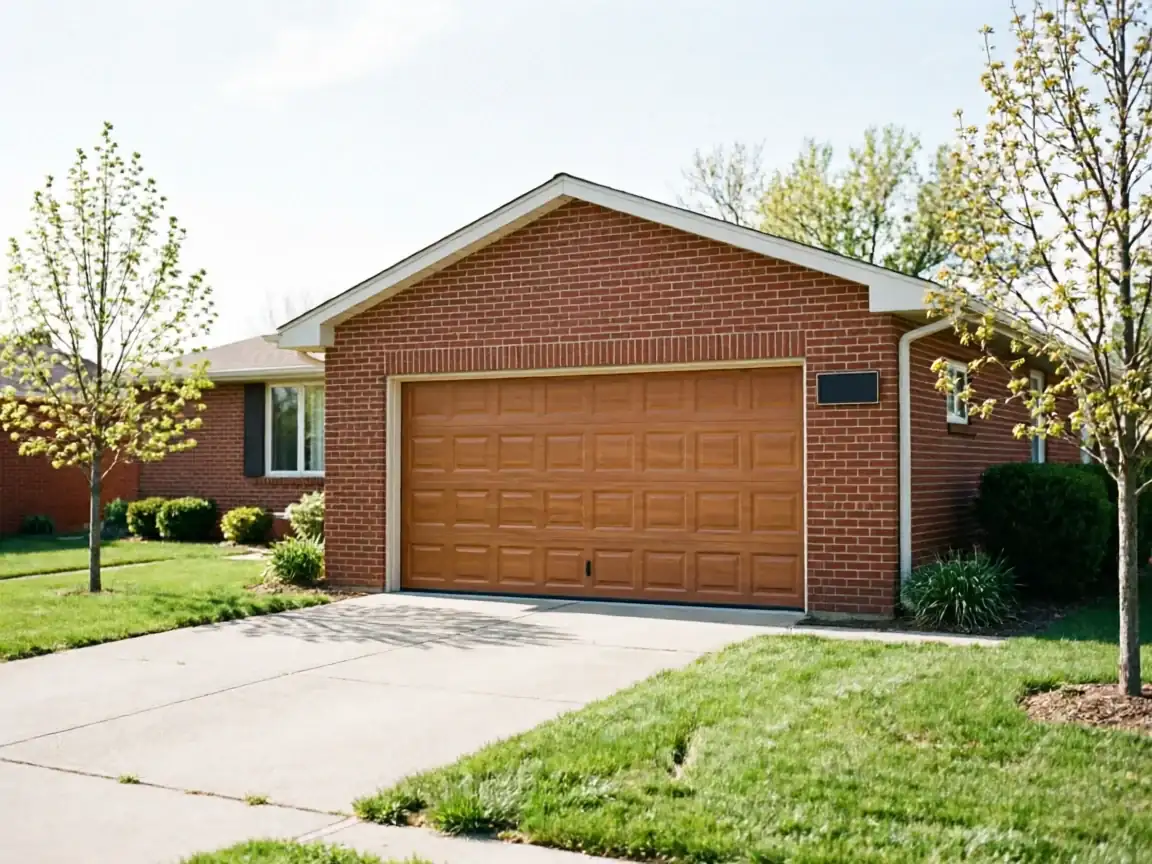
Across this service area - Savoy, Urbana, Mahomet, Lake of the Woods, Tolono, Thomasboro, Sidney, St. Joseph, Rantoul, Fisher, Monticello, and Villa Grove - the housing stock runs from 1956 up through 2000, with the heaviest concentration built in the 1960s and 70s. That's a long run of doors and openers that are well past the age where a spring was rated to perform like new. Most torsion springs are built for a set number of open-close cycles, not a set number of years, and a door that's been used daily since the 1970s has worked through that cycle count regardless of how well it was maintained.
What we see on calls is less about any one bad part and more about timing - a spring near the end of its life gets a cold morning, a slightly heavier door than usual, or a sticking track, and that's the day it lets go. None of that is unique to any single house. It's the ordinary outcome of this area's building era meeting this area's winters.