What to Check
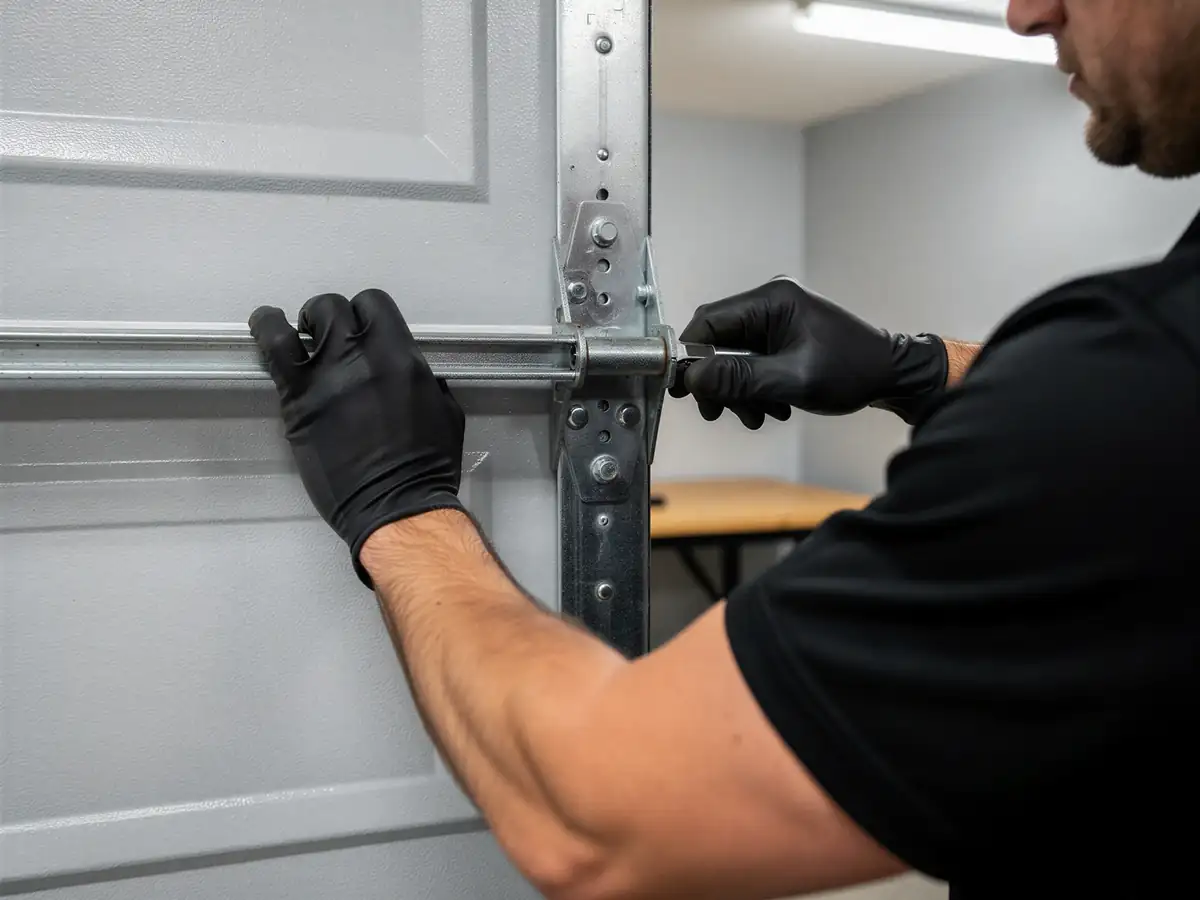
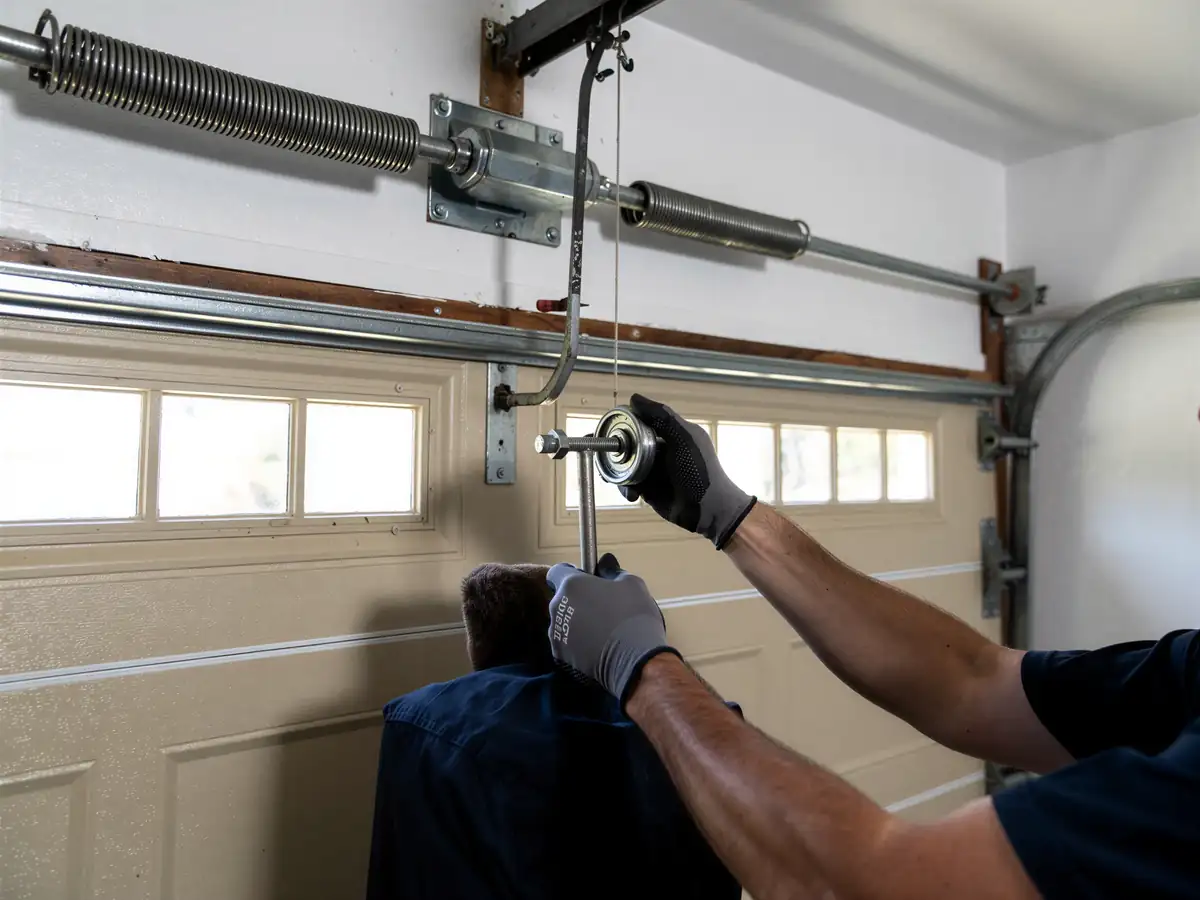
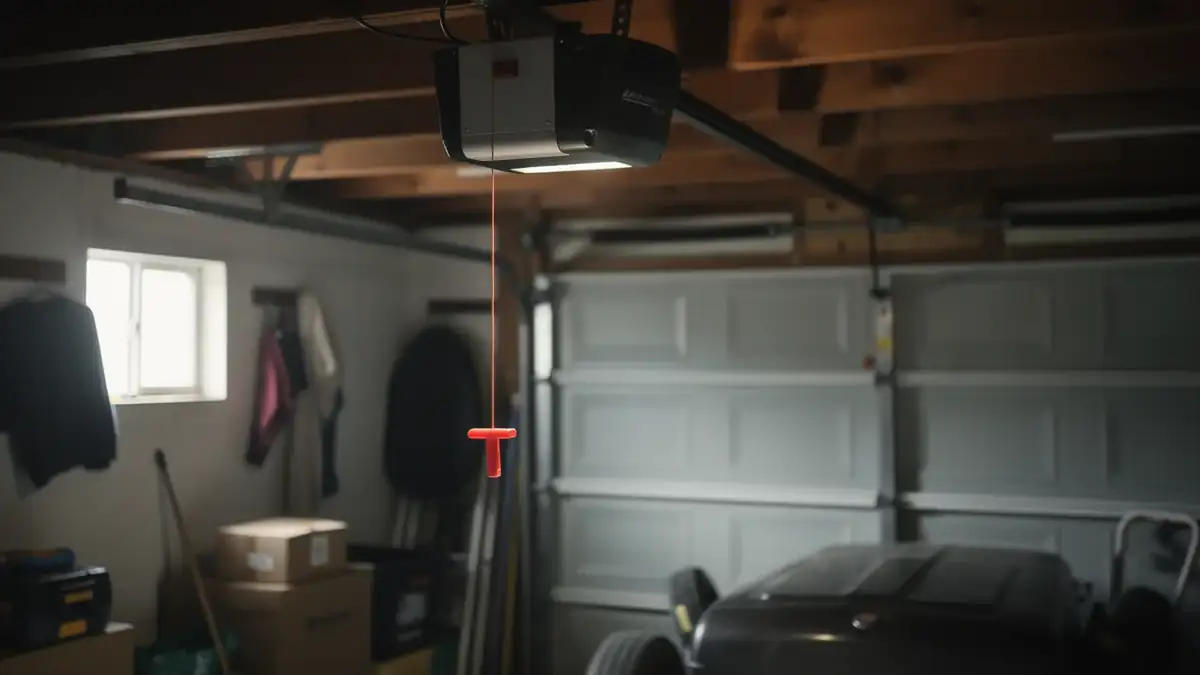
Start with the manual release cord - the red handle hanging from the trolley. If you've never pulled it, do it now, before a storm forces the issue, so you know the door moves freely by hand. Next, look at the opener's travel limit setting and the force adjustment; on units installed when a lot of this area's housing went up, those dials have usually drifted and never been touched since.
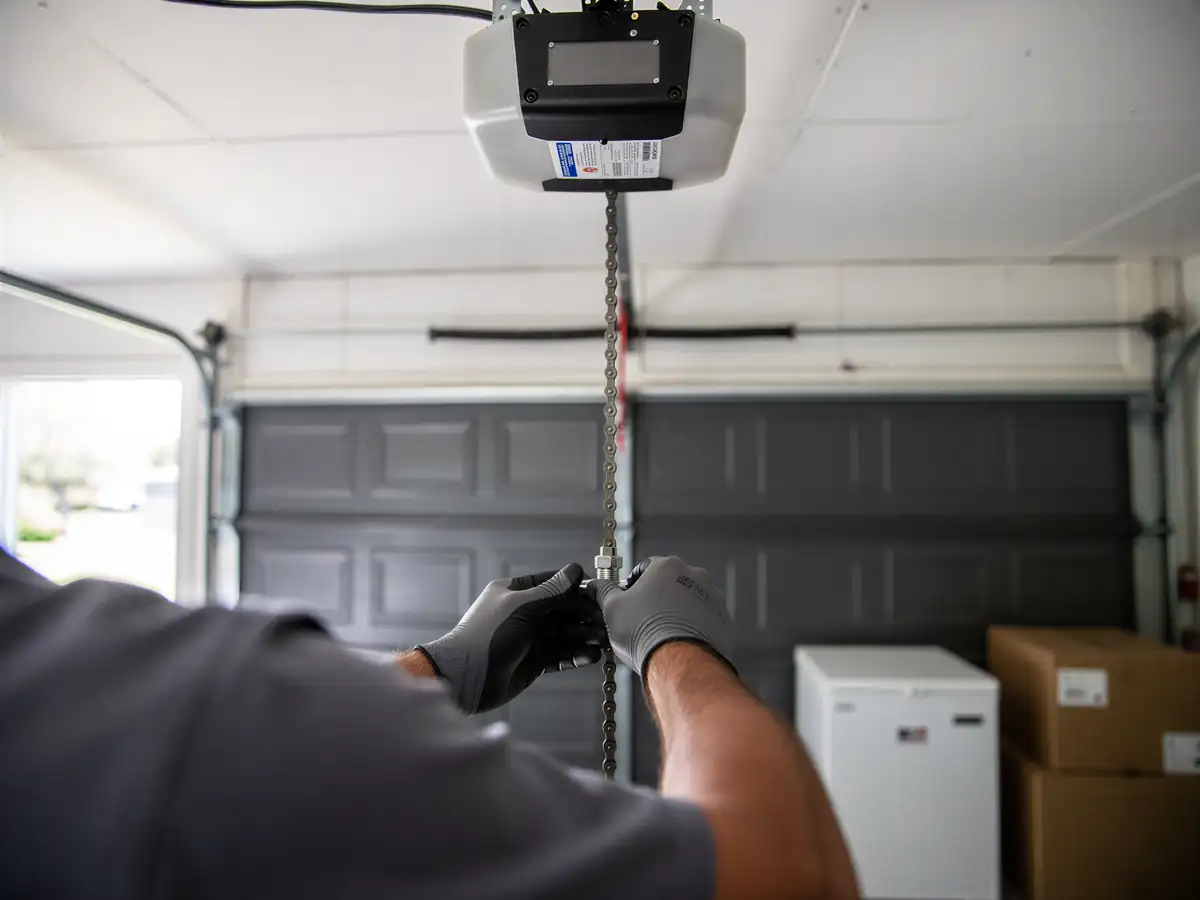
Check whether the unit has a battery backup at all. A good share of the openers in this service area predate battery backup as a standard feature, which means a power cut doesn't just stop the opener - it leaves you with the manual release as your only option until power returns. If you have a battery backup, test it under load, not just the indicator light; batteries that show green can still fail to lift a full door.
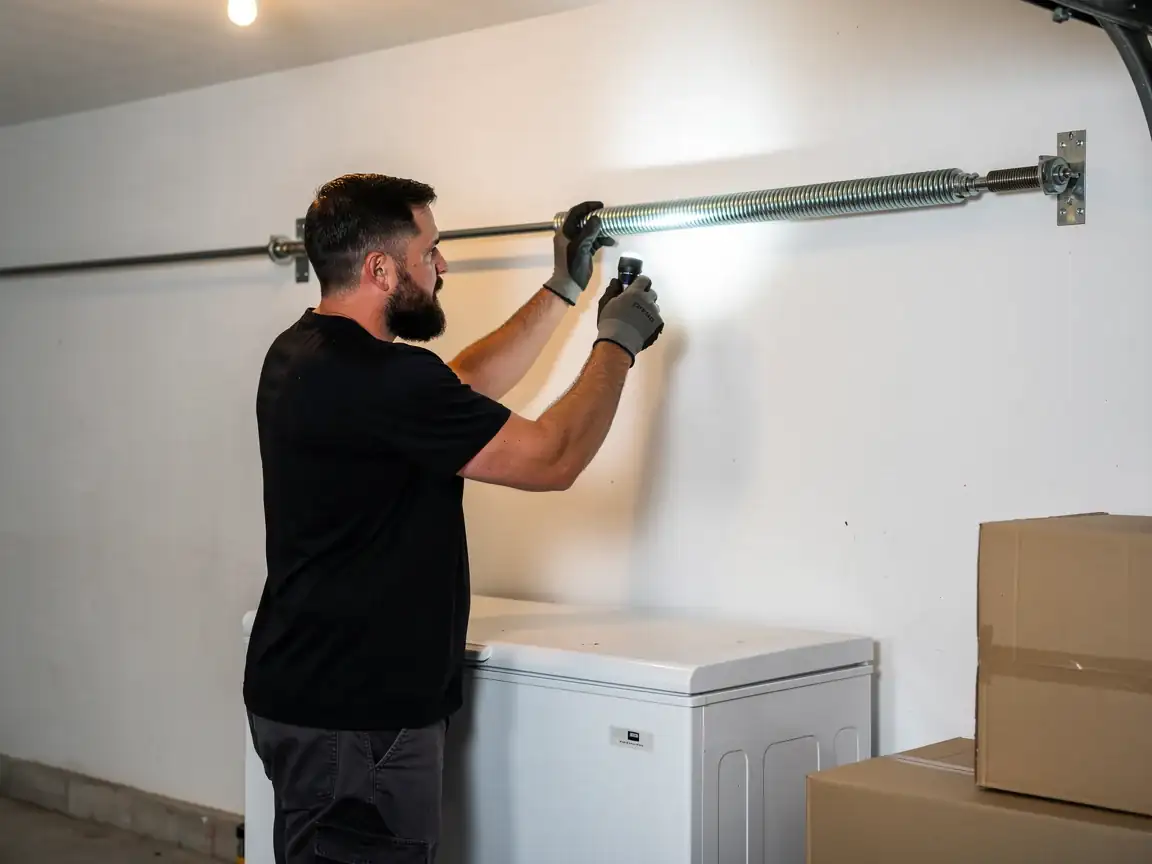
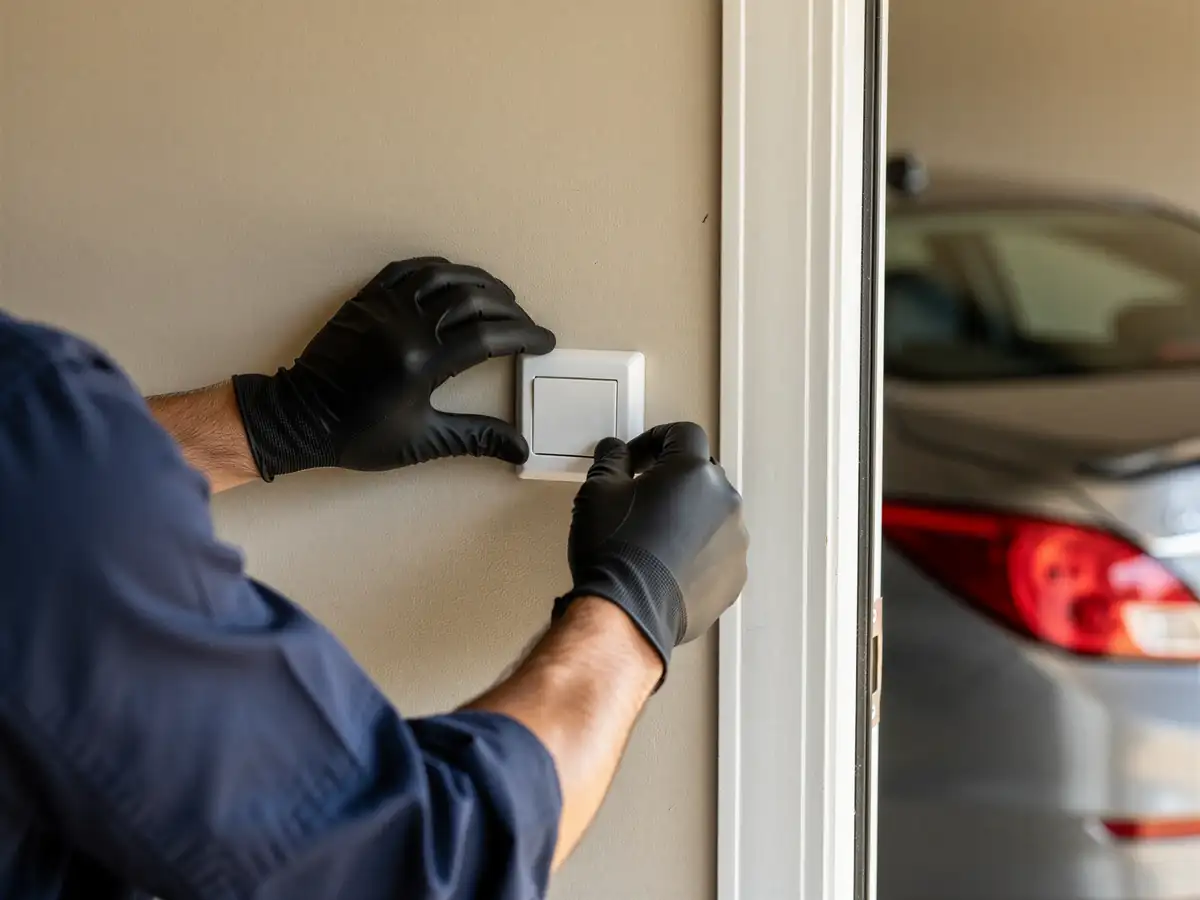
Last, check the wall console wiring where it enters the opener head. Homes built in this window often have the original low-voltage wire, brittle after decades, and a loose connection there mimics a dead opener even when the motor is fine. One honest limitation: we can't tell you which failure you have without seeing the unit - a dead capacitor, a worn gear, and a wiring fault all present the same way from the kitchen.
What You Pay
We're not going to put a number here that isn't backed by a real quote, because opener jobs vary too much to guess - a straight swap on a standard chain-drive unit is a different job than one that also needs a new wall bracket, rewired safety sensors, or a battery backup retrofit.
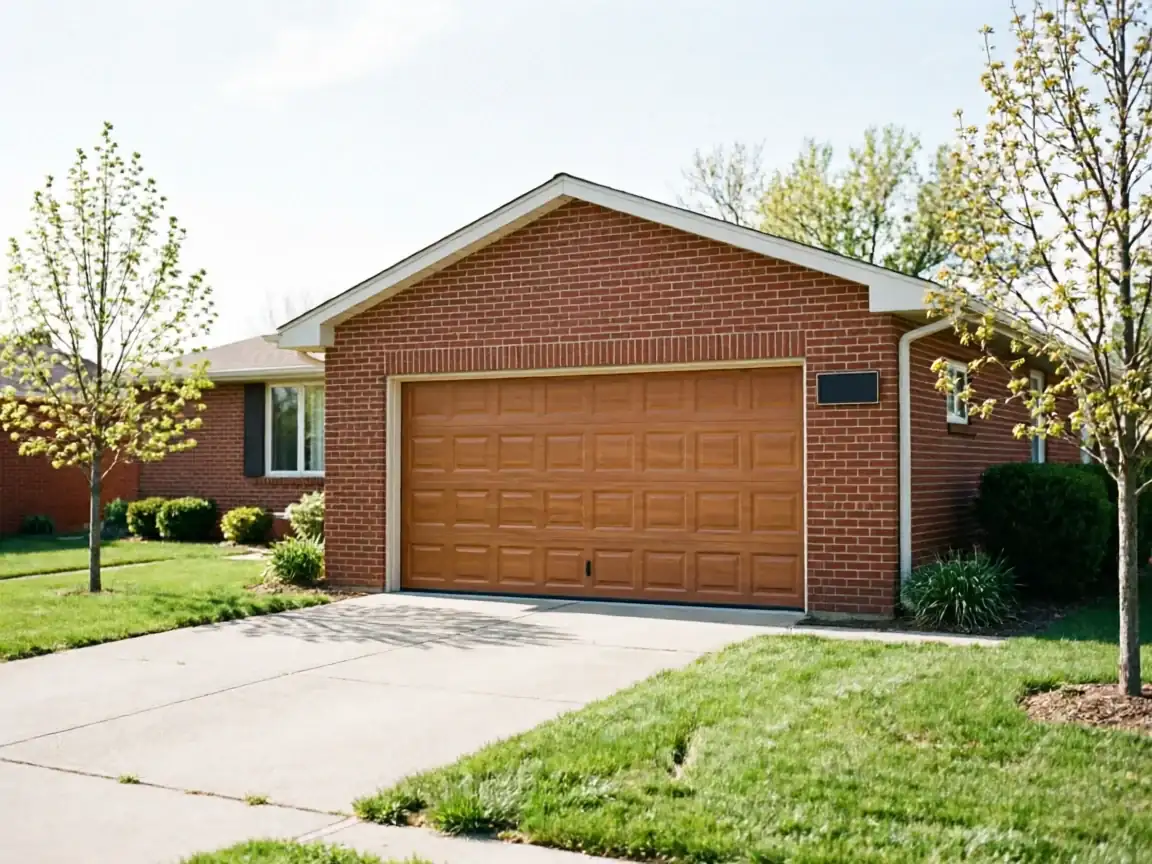
What we can tell you is what drives the cost in homes like the ones common here. A house from the 1960s or 70s often needs bracket and header reinforcement before a new opener goes up, because the original wood backing has aged out. That's not upselling - it's the same thing a licensed job requires anywhere that stock exists. If your garage was never wired for a dedicated outlet, that's an added step too.
Given the median household income across this area sits at $81,703, most owners we talk to decide to replace the opener outright once it's shown a failure, rather than keep patching a unit that's already past the point where parts are easy to find. Repairing a twenty-year-old motor to save it for another year rarely saves money once a service call is already on the books.
What the Weather Here Does to It
This area sits in a cold, moderate climate band
Not the brutal extremes of farther north, but enough freeze-thaw cycling and winter storm activity to matter. Ice accumulation on the track and bottom panel adds real resistance right when the opener motor is already straining against cold grease and a stiffened chain.
Power cuts tend to cluster around the same winter weather that stresses the door mechanically
So the two problems often show up together: the storm knocks out power, and the door that was already fighting ice can't be opened by hand easily either, because the opener's travel limits were fighting a half-frozen track all week.
A battery backup matters more here than it would in a climate without winter storm-driven outages
Since a summer power blip rarely lasts long enough to matter, but a winter outage tied to downed lines can run for hours. If your opener doesn't have one, that's the gap we'd flag first before anything else on the unit.
What Is Going On
Put the pieces together and the pattern across this area is consistent: a lot of the housing stock here dates to 1956 through 2000, with the bulk clustered in the 1960s and 70s, which means a lot of original or first-replacement openers are now old enough that parts availability is thinning out. Add a cold-moderate climate with real winter power cuts, and you get the two most common service calls - a motor that's finally worn out, and a motor that's fine but has no power and no battery backup to fall back on.
Across the service area, from Savoy and Urbana a few miles out to Villa Grove eighteen miles away, that combination shows up the same way: homeowners find out their opener's age during a storm, not before it. With 36,992 households and 13,187 owner-occupied houses in this area, that's a lot of garages running hardware that's older than the roof shingles.
The fix usually isn't complicated once we're looking at it in person - it's rarely more than confirming age, checking the wiring, and deciding whether a battery backup retrofit makes sense given the climate here.