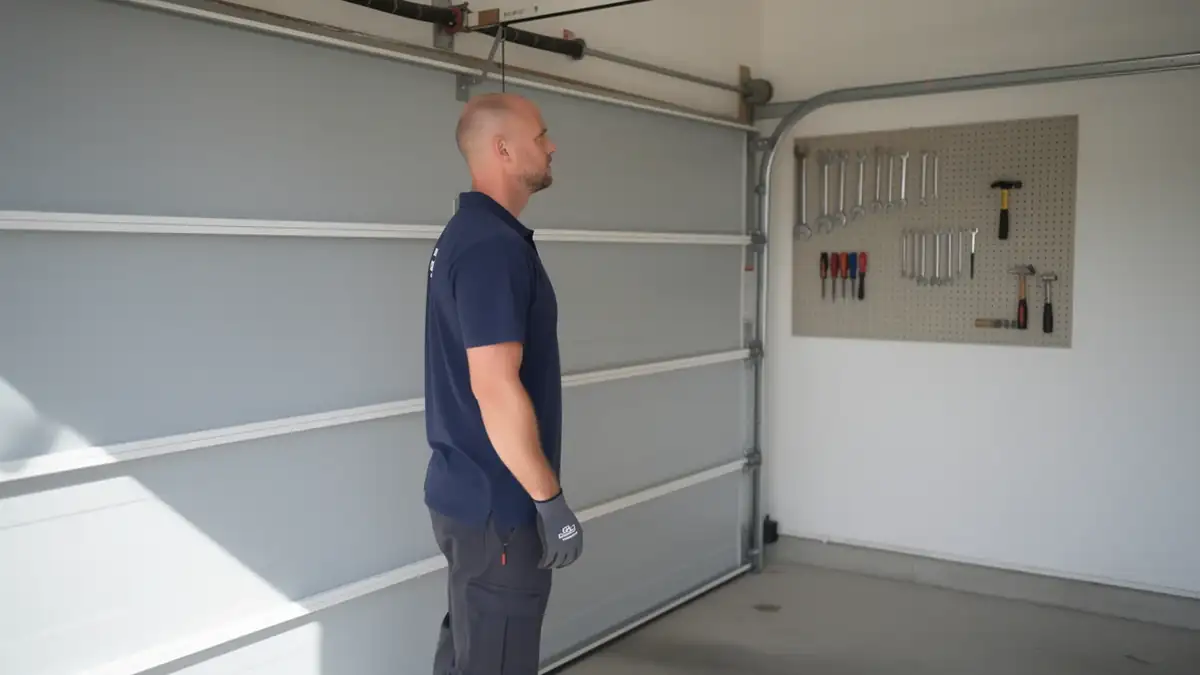
What to Check
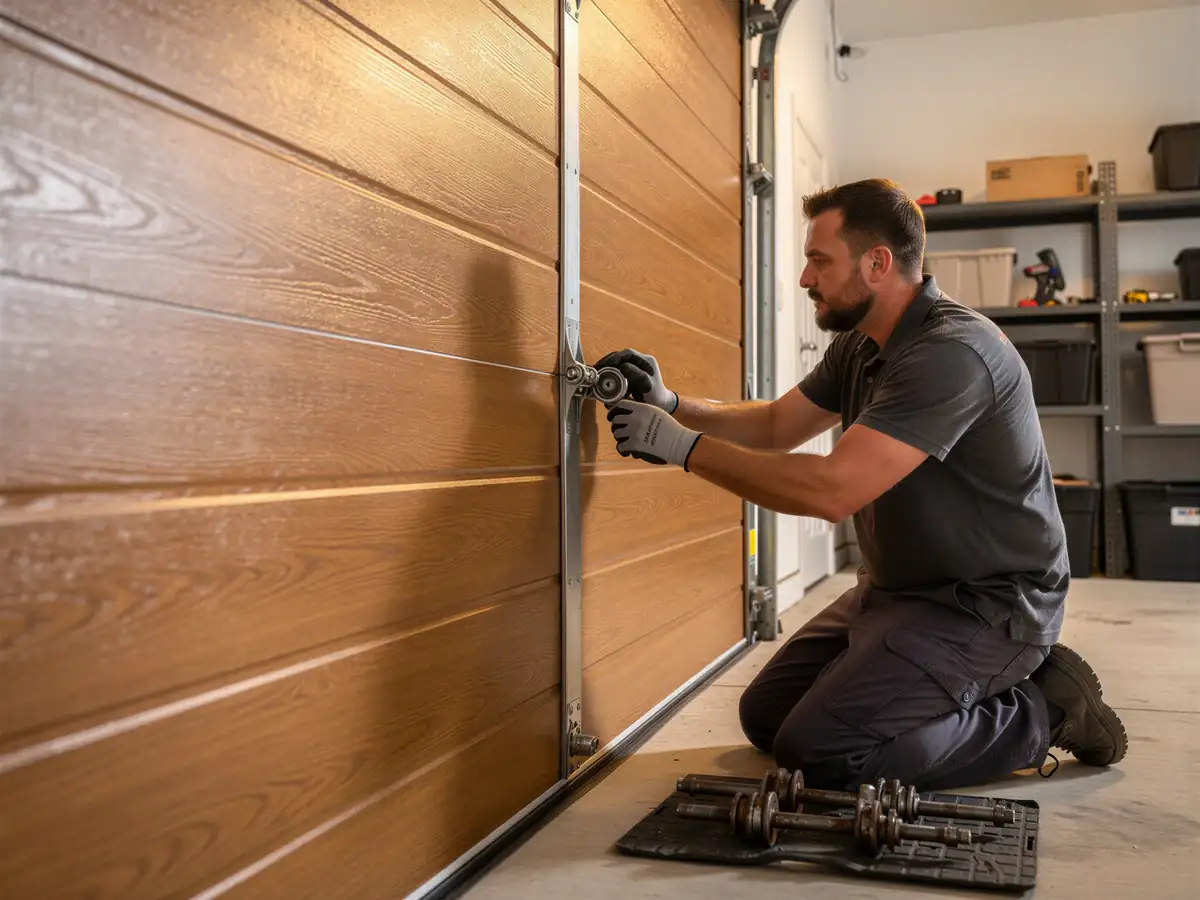
Most of the garage doors we get called out on here sit in houses built between 1956 and 2000, with a lot of that stock dating to the 1960s and 70s across the twelve areas we cover. That matters because hardware from that era wasn't built with the sealed bearings and nylon rollers you'd find on anything installed in the last ten years. If your door makes a rhythmic thump once per rotation, go stand next to it and watch the rollers - on a house from this period, chances are they're the original steel ones, worn down to a flat spot.
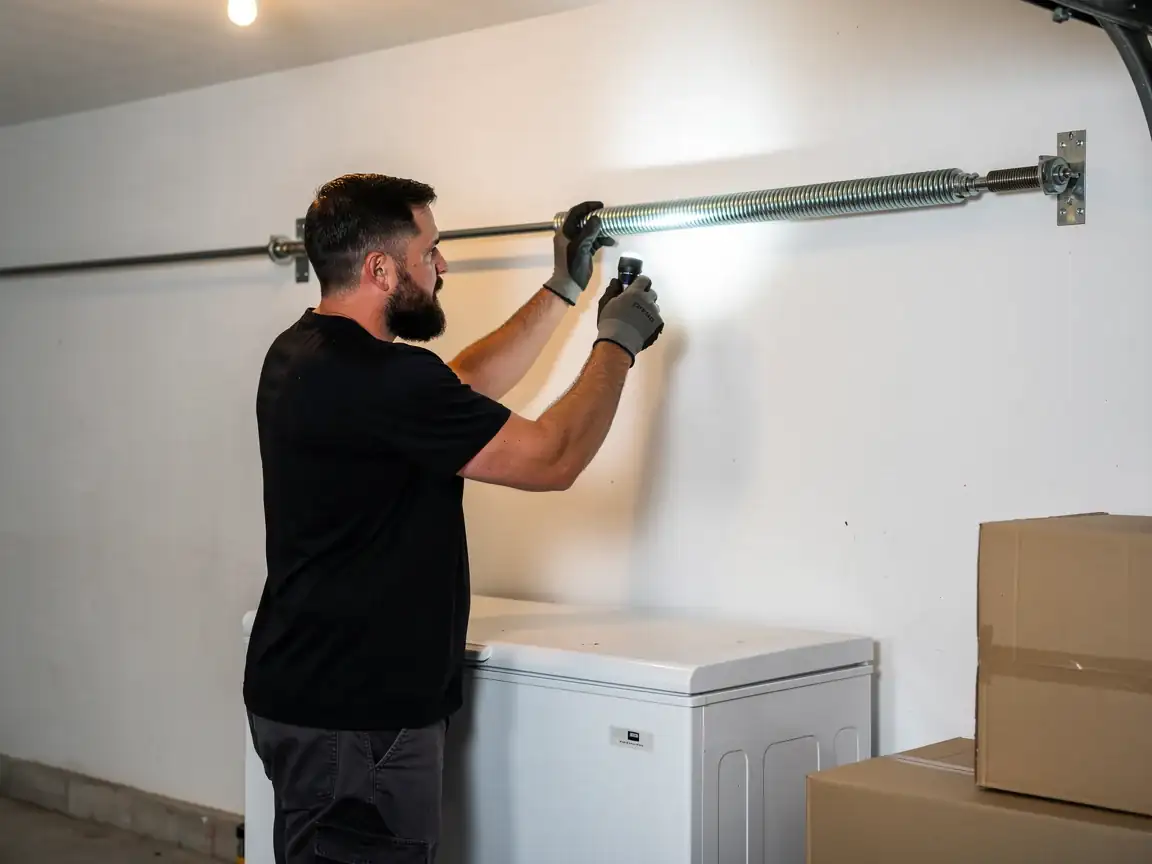
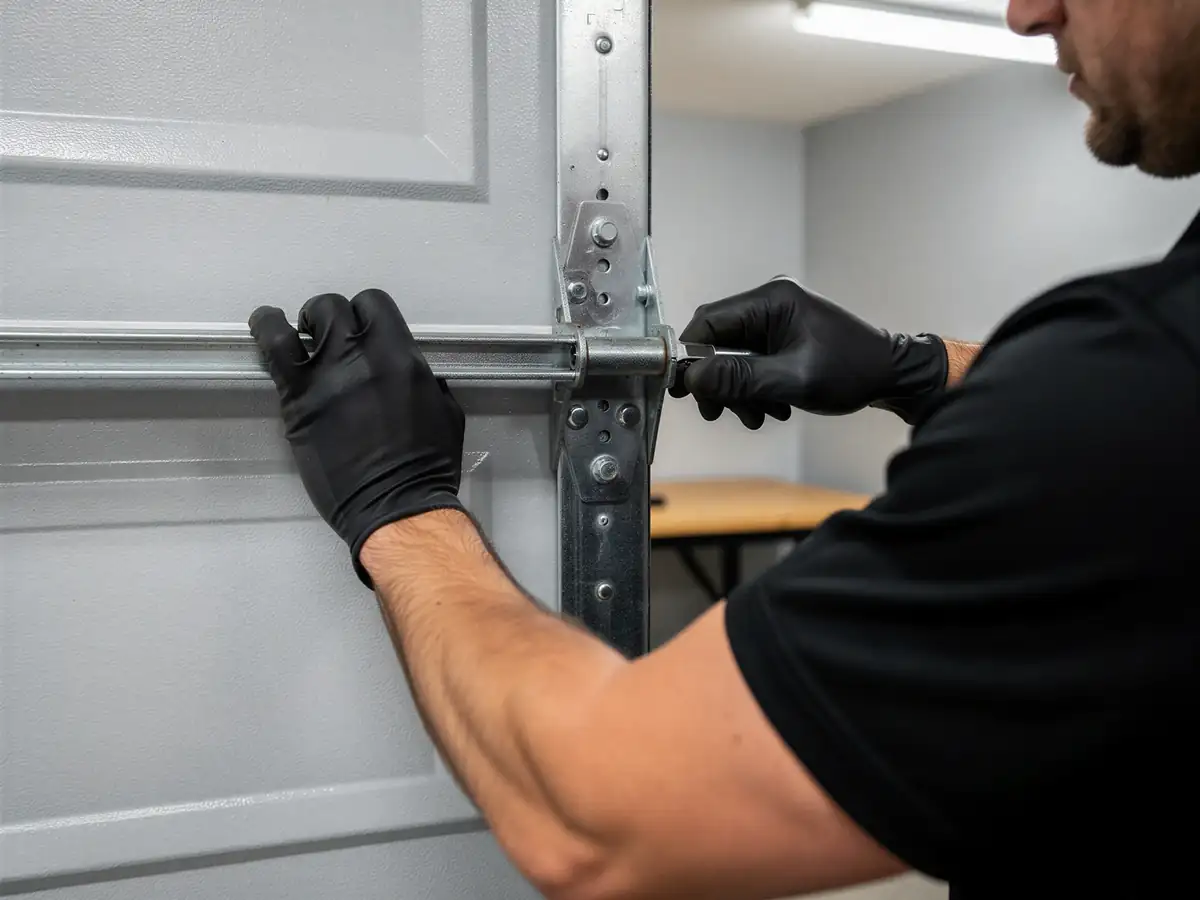
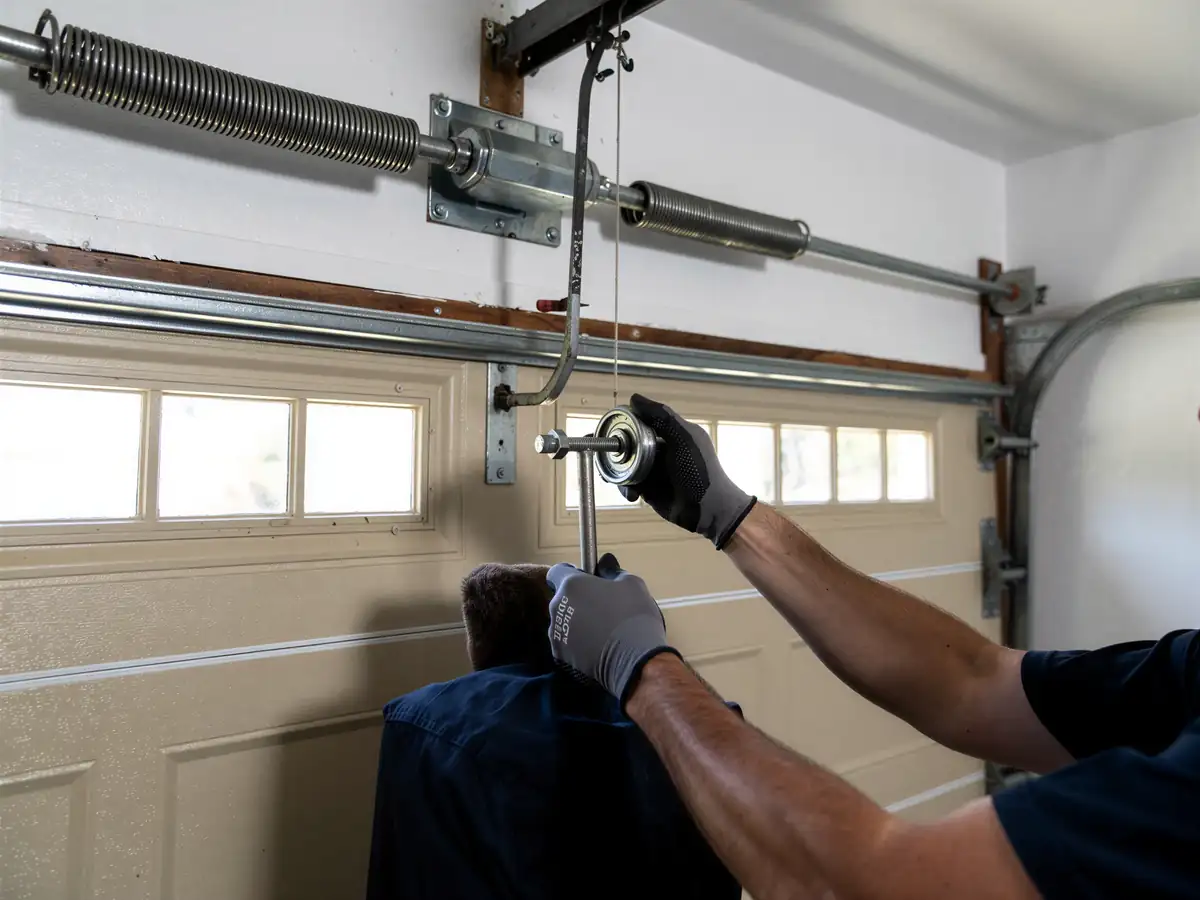
Check the track first. Pull the release handle, move the door by hand, and feel for binding at the same spot every time. That's a bent track, common on doors this old because the brackets were never upgraded. Then look at the spring. A torsion spring that's lost tension will let the door drop fast once it's partway up - don't reach for it, that's a call for us, not a DIY fix.
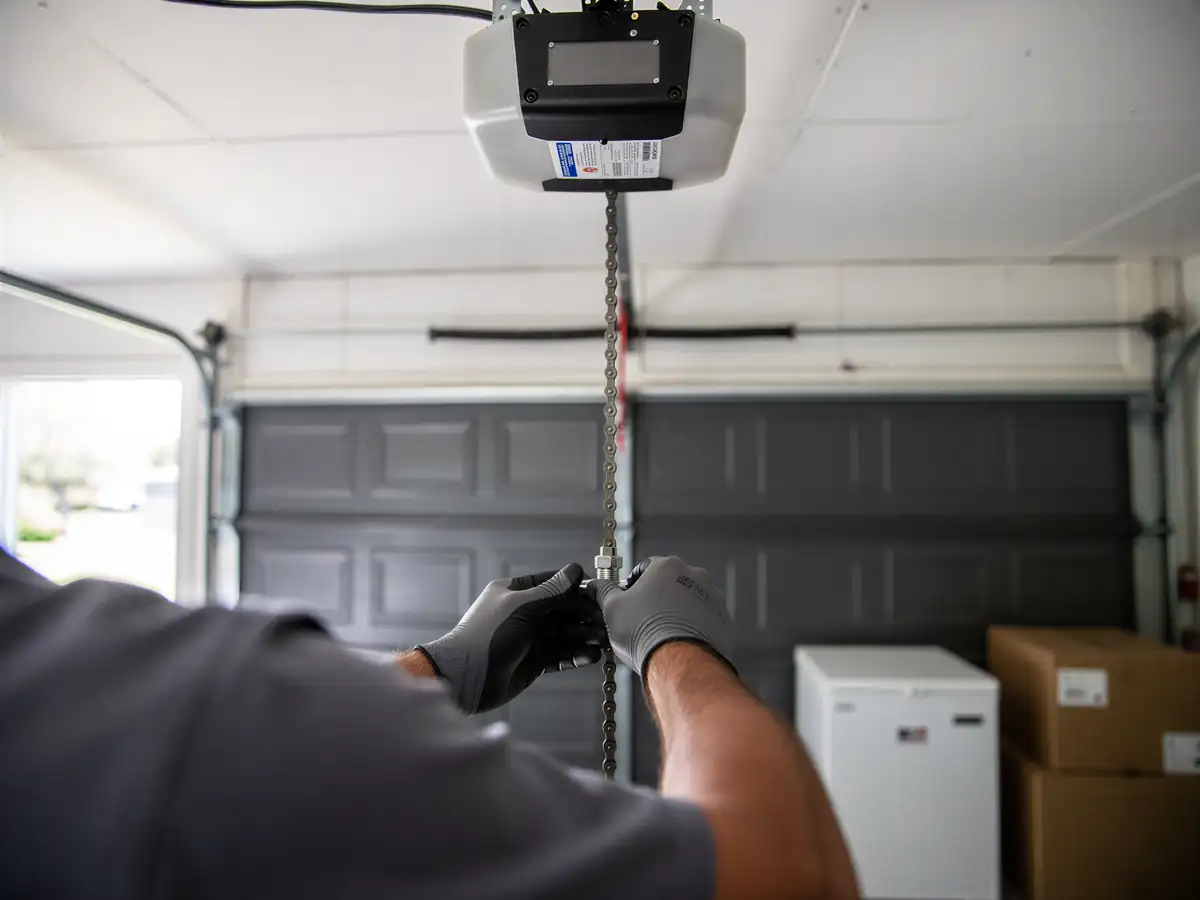
Listen for a difference between a squeal and a grind. A squeal is usually dry metal - rollers or hinges. A grind, especially on the opener side, often means a stripped gear inside the unit, which on hardware this old is frequently past the point of a cheap fix.
What You Pay
We don't have a flat number to hand you here, because what a noisy door costs to fix depends entirely on what's making the noise - a $20 roller swap and a stripped opener gear are not the same visit. What we can tell you is that median household income across our service area runs $81,703, and that tracks with what we see on jobs: most owners here fix the part that's failing rather than replace the whole unit, because the door itself is usually sound even when one component isn't.
With 36,992 households and 13,187 owner-occupied houses in the area we work, a big share of what we quote is hardware replacement on doors original to houses from the 1960s and 70s - springs, rollers, the occasional bent track section - rather than full door swaps. If your opener is grinding and it's original to a house built before 1980, factor in that parts for that generation of opener can be harder to source, which sometimes pushes the math toward replacing the unit instead of chasing a part.
What the Weather Here Does to It
Champaign sits in a moderate-cold climate band
And that shows up in garage door noise every winter. Steel contracts in the cold, and on a door with original hardware from the 1960s-2000 window, that contraction is enough to change the clearance between rollers and track overnight. You'll hear it as a squeal that's worse on the first open of a cold morning and quiets down once the door's been run a few times.
Lubricant matters more here than in a milder climate
Grease that's fine in summer can stiffen up when temperatures drop, and a stiff lubricant on an older torsion spring changes how it unwinds - sometimes you'll hear a catch-and-release sound instead of a smooth rotation. That's not usually the spring failing, it's the grease fighting the cold.
Temperature swings also work on wood and composite panels if your door has them
Expanding and contracting the panel against its frame. On a door old enough to have settled hardware, that flex can produce a popping sound at the top corners that has nothing to do with the opener or the spring at all.
What Is Going On
Put the housing age and the climate together and you get a pretty predictable set of noises. A house built in the 1960s or 70s still running its original or first-replacement hardware, sitting through Champaign winters, is going to develop roller squeal, track binding from cold contraction, and eventually a tired spring - usually in that order over a few years.
We can't tell you from a description alone whether a given noise is a $30 fix or a $300 one - that's the honest limit here, and it's why we look at the door in person before quoting anything. What we can tell you is that a noise that only shows up in cold weather and goes away once the door warms up is a different problem than one that's there every time, in every season. The first is usually hardware responding to temperature. The second is usually wear that's not going to fix itself.