Serving Champaign, IL & nearby
(217) 269-0897
Champaign, IL

Garage Door Repair for Fisher's 1970s Housing Stock

Fisher homes mostly date to the 1970s, so original torsion hardware is common. We travel 14 miles from Champaign to fix springs, tracks, and openers built to that era's spec.

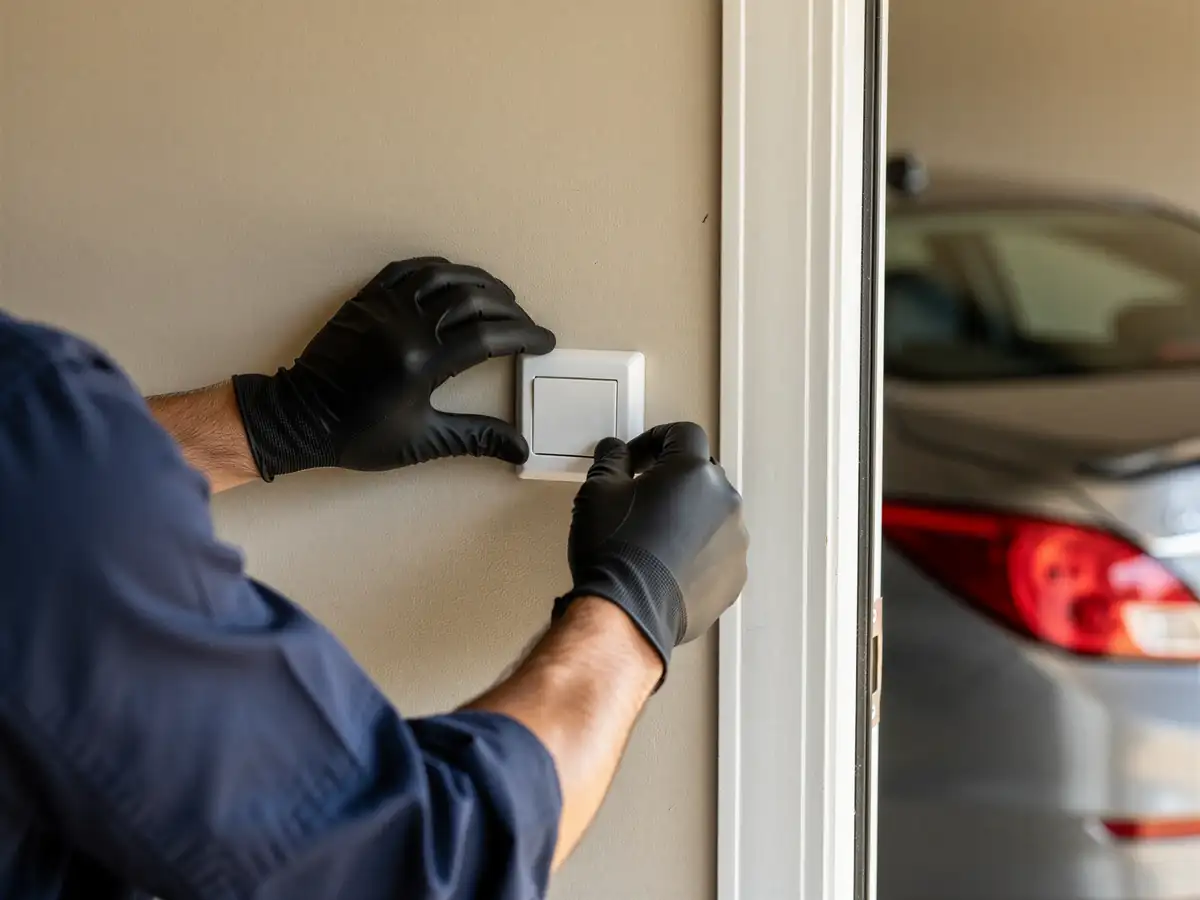
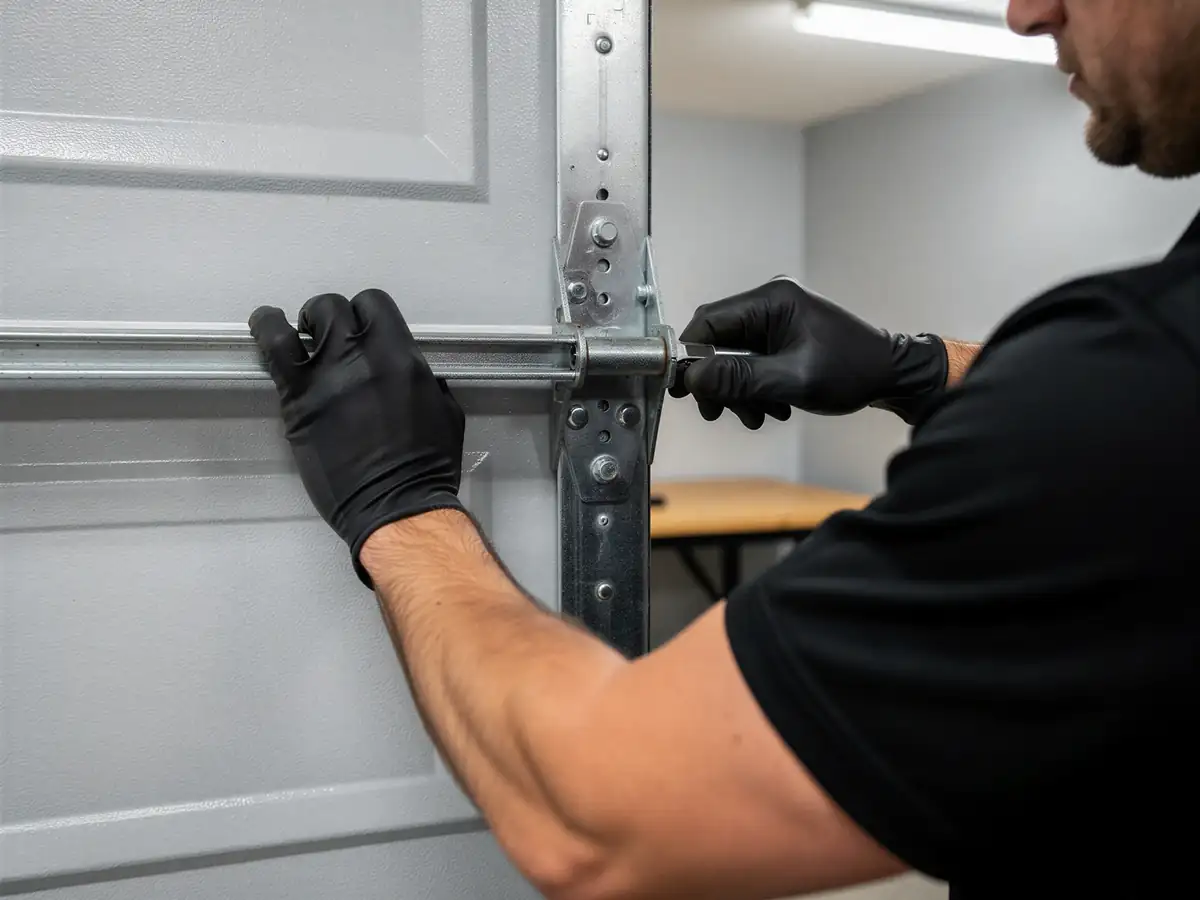
A technician in black gloves adjusts a garage door roller and track.
Champaign, IL
8 services
8 service areas
Diagnosis first, then the fix

What You Pay

We don't quote a flat number over the phone because what a Fisher job costs depends on what's actually failed, and in this town that's often more than one thing at once. A house built around 1974 that's never had its garage door touched is carrying 50 years on the same torsion spring, the same lift cable, maybe the same steel track. Replacing one worn part on hardware that old sometimes just buys you a few months before the next part goes. We'll tell you straight if a single-spring fix makes sense or if you're better off swapping the whole assembly while the truck's already out there. The trip from Champaign is 14 miles, and that travel is part of why we're upfront about scope before we start, not after. We're not going to pad a bill with parts you don't need, but we're also not going to pretend a 1970s-era door with one good spring and one rusted-through one is a one-part job.

Why This Fails Locally

Fisher's housing centers on 1974, which puts a lot of garages here on original torsion hardware - the galvanized springs and bare steel track that came standard in that era, before coil coatings and nylon rollers were common. That hardware was built for a lot fewer winters than it's now seen. Champaign's cold-moderate climate means freeze-thaw cycling every year: moisture gets into the spring coils overnight, rusts the surface, and the metal loses tensile strength slowly until one day it just lets go, usually on the coldest morning you've had in weeks. None of that is a Fisher-specific defect - it's what happens to any 50-year-old spring in this climate - but Fisher's housing age means a higher share of doors here are still running that original part than in newer subdivisions nearby. If your door was installed with the house, the spring under tension right now is almost certainly the same one.

Doing It Yourself

A torsion spring holds enough stored energy to break a bone or worse, and on a door this old you're also dealing with mounting hardware that's had 50 years to rust into the header. We don't recommend DIY spring work on original 1970s hardware, full stop - that's the one job we'll always say call someone for, us or otherwise. What you can check yourself: the track for visible rust flaking or bends, the bottom roller brackets for play, and whether the door drifts down on its own when disconnected from the opener (a sign the spring is losing tension gradually rather than snapping outright). If you hear a grinding or popping sound when the door moves, stop using it and call. Parts for some original hardware from this era aren't something we carry on the truck - older spring winds and some bracket styles may need to be special-ordered, which can mean a short wait before the final repair, even after the visit.

The Symptom

The most common call we get from this stretch of homes, given the age of the stock, is a door that won't open at all, or one that opens a few inches and stops - both classic signs of a torsion spring that's finally given out after decades on the same coil. Some owners hear it happen: a loud bang from the garage, usually in cold weather when the metal's least forgiving. Others notice it build gradually first - the opener straining harder, the door feeling heavier by hand, a slight sag on one side when the door's halfway up. On a house built in the 1974 range, if nobody's touched the spring since it was installed, it's not a question of if this happens, it's when. A door that's starting to sound different than it did a year ago is worth a look before it fails on you.

What Can Go Wrong

Original hardware rarely fails in just one part. A spring that finally breaks after 50 years puts extra strain on the cables and the opener drive at the exact moment it lets go, so a job that starts as 'replace the spring' can turn into cables, a drum, or an opener gear once we're actually looking at it. On older track systems, a snapped spring can let the door drop hard enough to bend the track or crack a panel on the way down, which turns a parts repair into a bigger one. There's also a safety angle specific to houses this age: older openers from the original install may not have the auto-reverse sensors required in newer code, so if yours hasn't been swapped since the house was built, that's worth flagging even if the door itself is working fine today.
How it works

From “it’s stuck” to “it’s fixed”

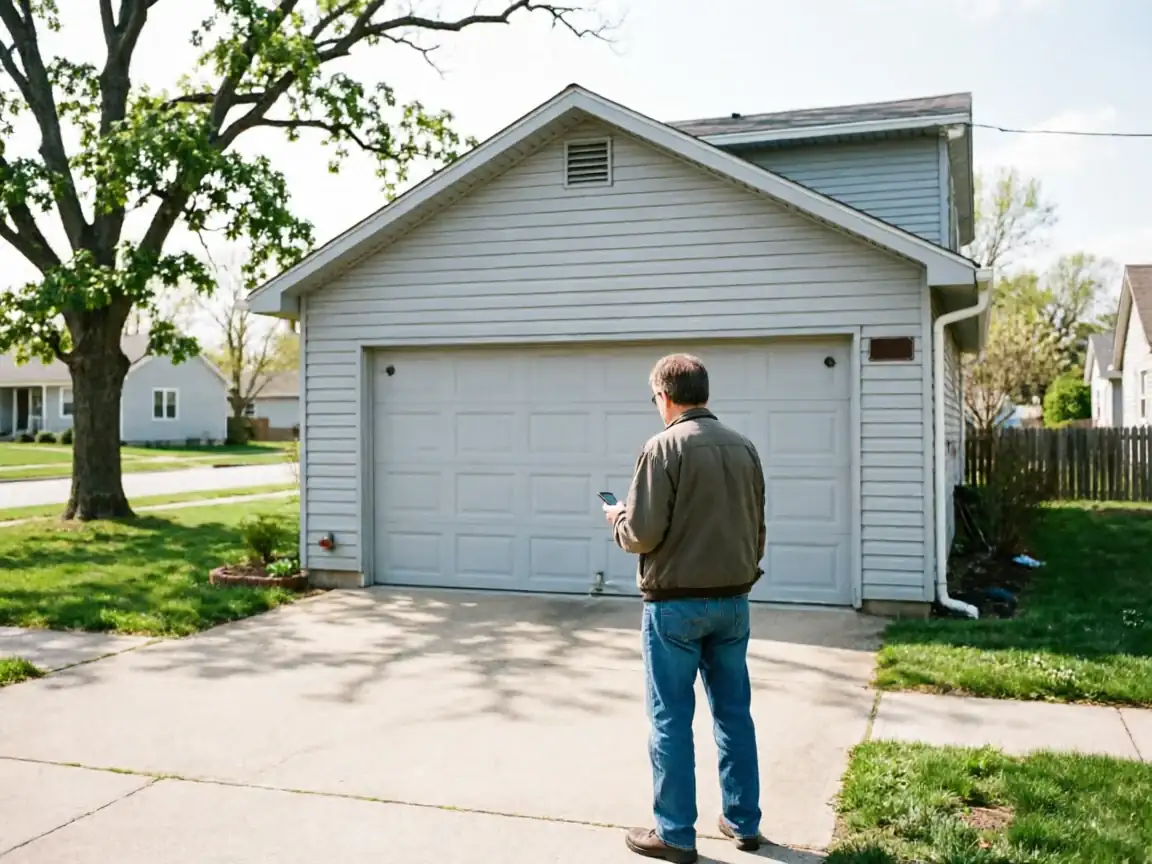
A man stands in a driveway looking at his phone in front of a garage.
1

Tell us what’s wrong

Describe the symptom - won’t open, loud bang, opener runs but the door won’t move.

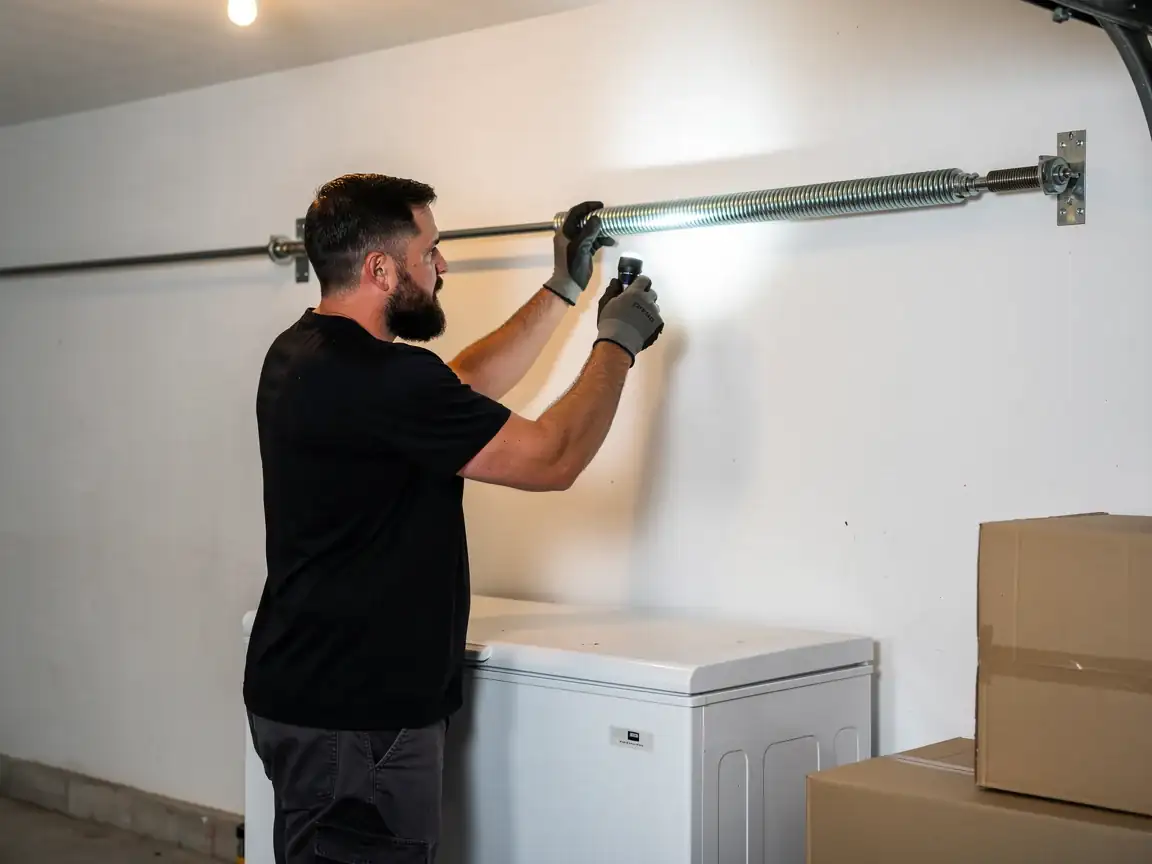
A technician inspects a garage door torsion spring with a flashlight.
2

On-site diagnosis

A technician tests the door under power and by hand and finds what actually failed.

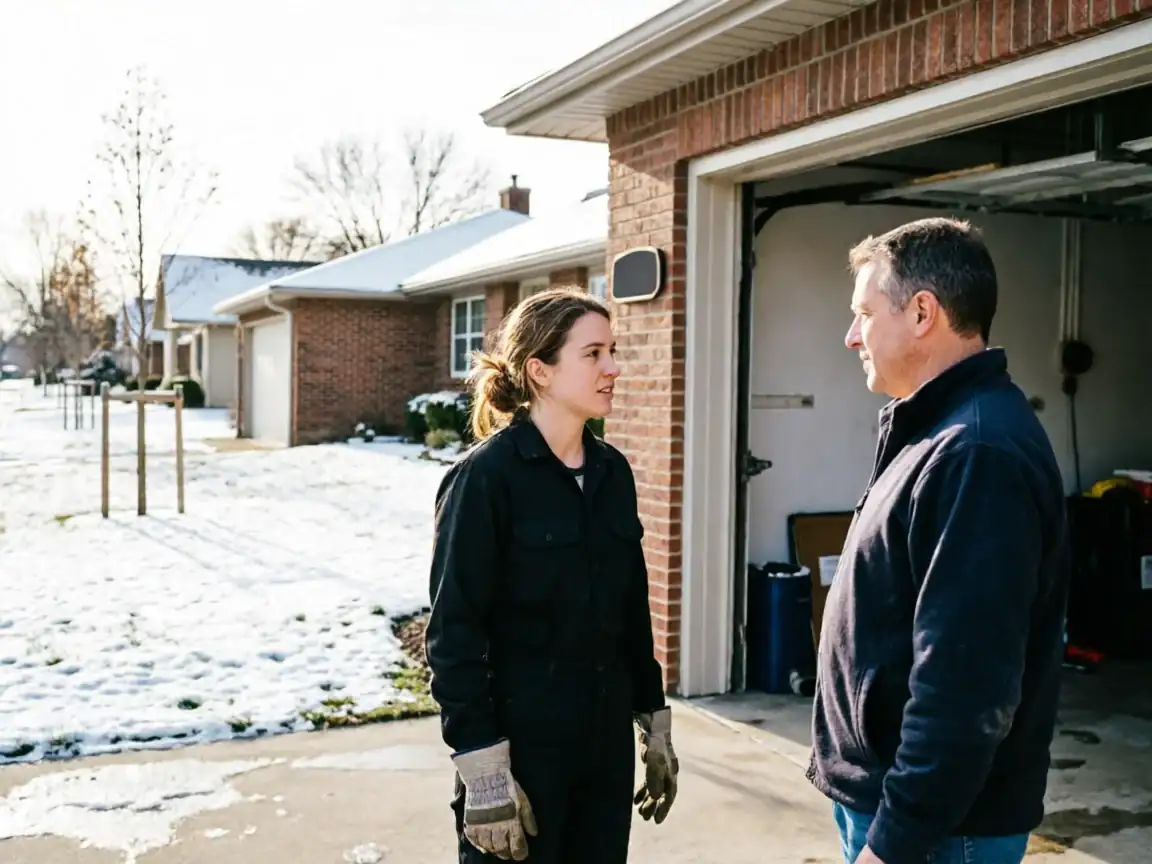
A technician talks to a man in front of an open garage door in winter.
3

Clear, up-front plan

You get the fix that’s needed and what drives the cost - before any work starts.

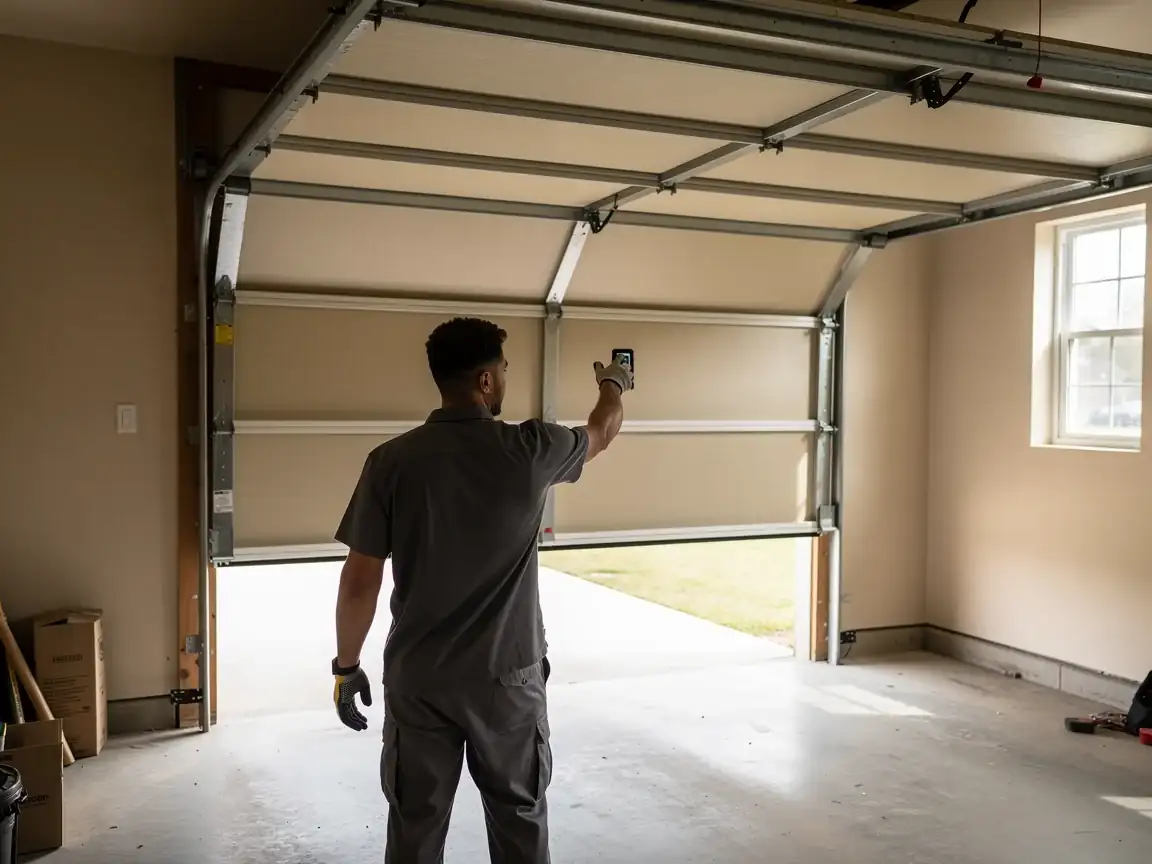
A technician in a gray uniform holds a remote, looking at an open garage door.
4

Repaired & tested

The repair is done, the door is set true and tested, and the work area left clean.

Not sure which repair your door needs in Champaign, IL? Describe what it’s doing - every job starts with a diagnosis.

How we work

What to expect

Diagnosis firstEvery visit starts by finding what actually failed - not a pre-written parts list.
The right part for the doorSprings and openers matched to the door’s weight and age, so the fix holds up.
Straight answersWhen a repair makes more sense than a replacement - or the reverse - you hear it plainly.
Clean, careful workTension released safely, hardware set true, the door tested under power before we leave.
86,096Residents in Champaign
8Garage door services
8Neighborhoods & suburbs
ILServing Champaign, IL
Questions

Frequently asked

Straight answers about garage door repair in Champaign. Still unsure? Ask us directly.

01Is it normal for a door this old to still have its original spring?

Yes - a lot of garages in Fisher do, since the housing stock here centers on the early-to-mid 1970s and garage door hardware wasn't something most owners replaced unless it broke. If your door was installed with the house and nothing's been swapped, that spring has likely been under tension for close to 50 years.

02Do you carry parts for older torsion hardware on the truck?

Some, not all. Common spring sizes and cable lengths we stock, but certain original mounting brackets and older spring winds from 1970s-era installs sometimes need to be ordered, which can add a short wait before we finish the job.

03How far is Fisher from your Champaign location?

About 14 miles. We travel out to Fisher for repair calls; we don't keep a separate branch there, so the visit is scheduled from Champaign.

04Why did my spring break in cold weather specifically?

Steel loses some flexibility as temperatures drop, and moisture that gets into spring coils overnight contributes to rust over the years. On older hardware that's already worn thin from decades of cycling, a cold morning is often what finally pushes a weakened spring past its limit.

Ready to get your garage door sorted?

Tell us what it’s doing and where you are in Champaign - we’ll take it from there.

Request a QuoteCall