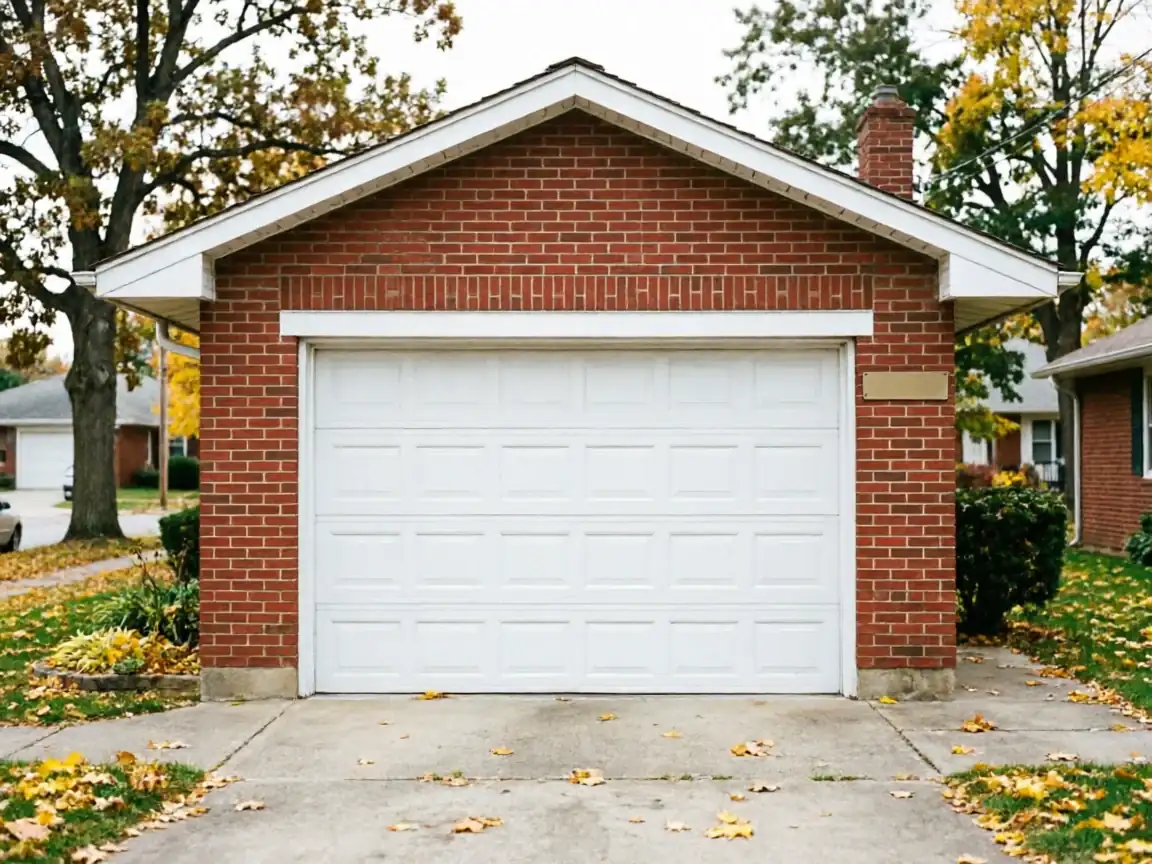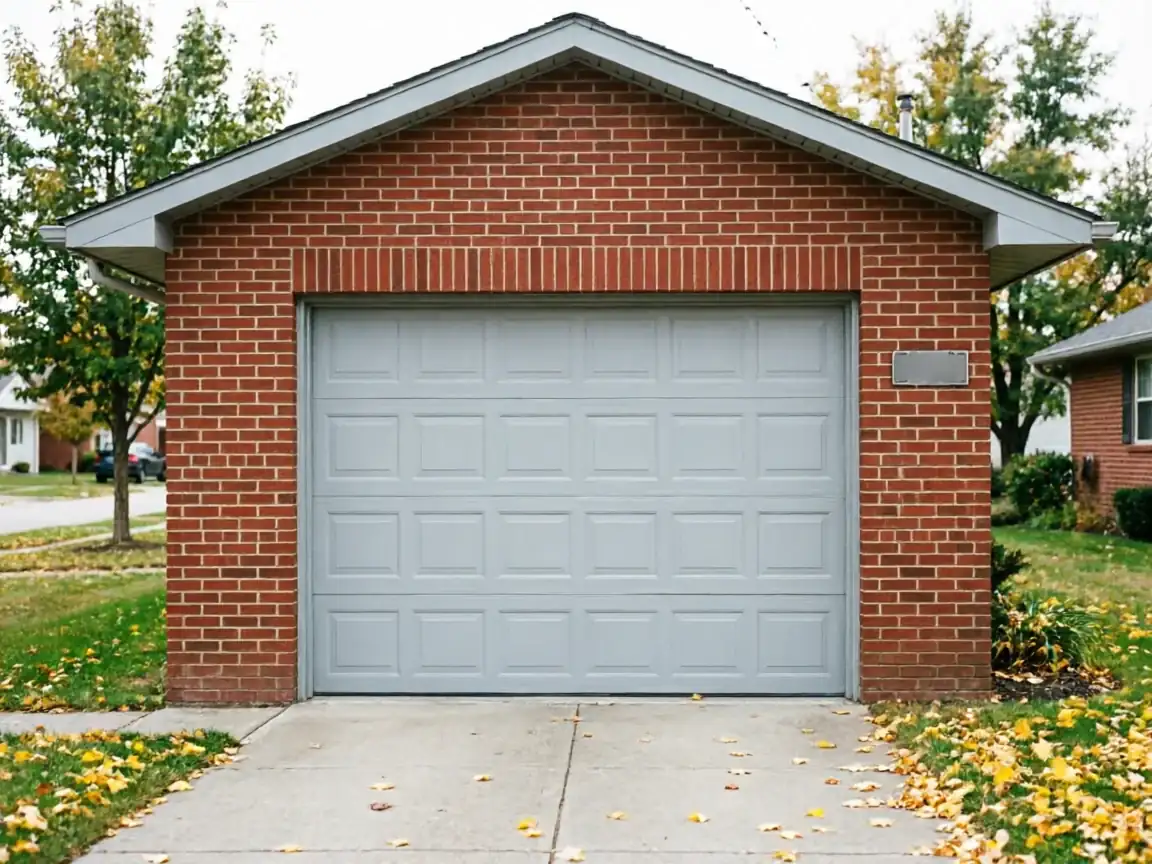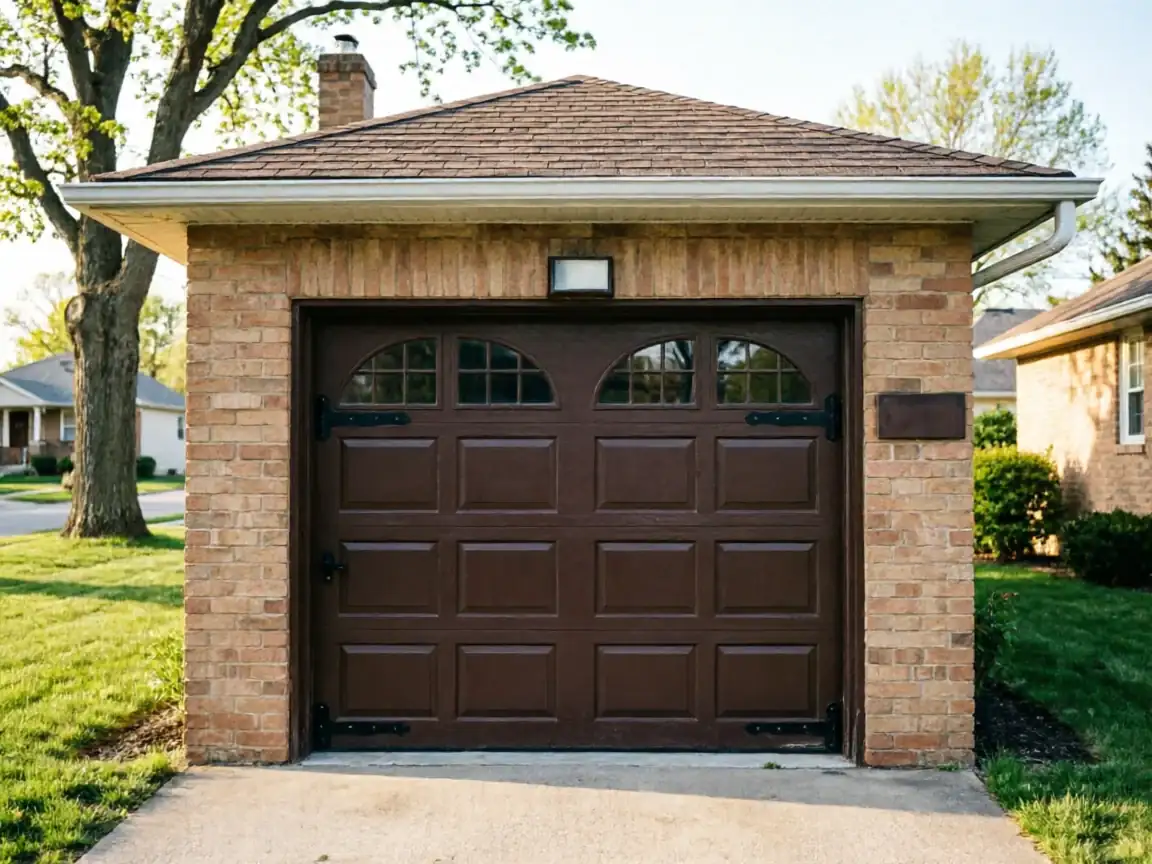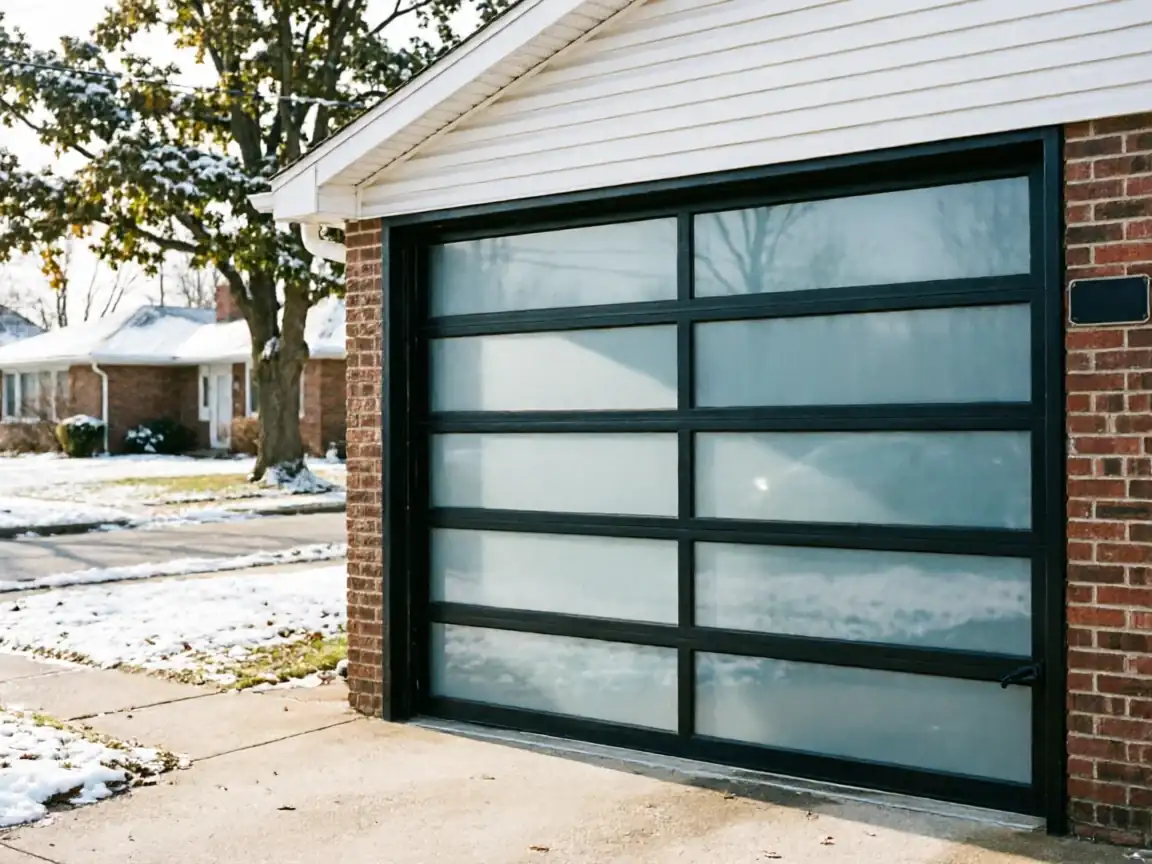
How to Book
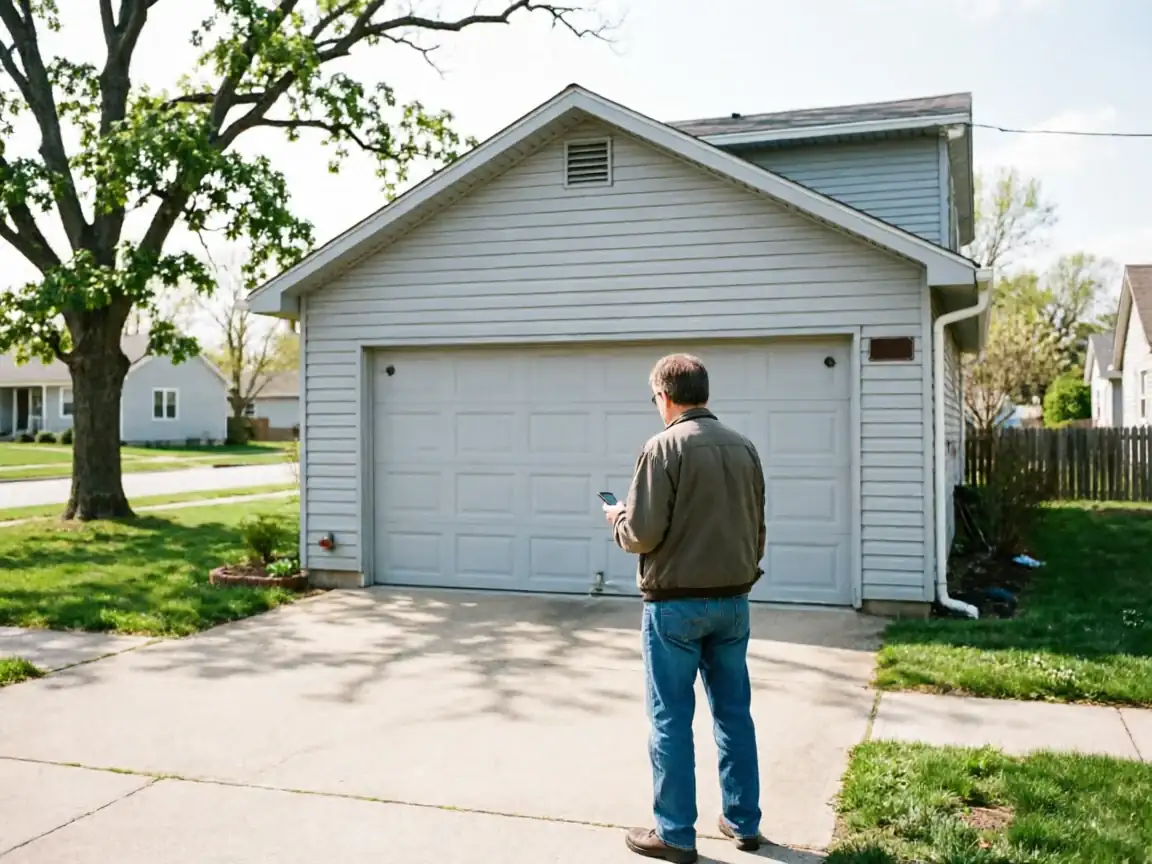
We don't keep a branch in Monticello - the truck comes from Champaign, seventeen miles out, every time. Booking works the same as it does for the rest of the area we cover: you call or use the site, tell us what the door is doing, and we schedule the drive out. Because every job here starts with a seventeen-mile trip, we ask for a clear description up front - stuck door, broken spring, opener that hums but doesn't lift - so the right parts are on the truck before it leaves the shop. We don't promise a same-day window for Monticello specifically; distance is distance, and we'd rather tell you that plainly than guess at a time we can't back up. If you know the age of your house, mention it when you call. Given that most homes on this side of town were built in the mid-1970s, that single detail usually tells us more about what's wrong with the door than a description of the symptom does. See the Monticello service page for what we cover out this way, or the main Champaign service page for the full list of work we do.
Why This Fails Locally
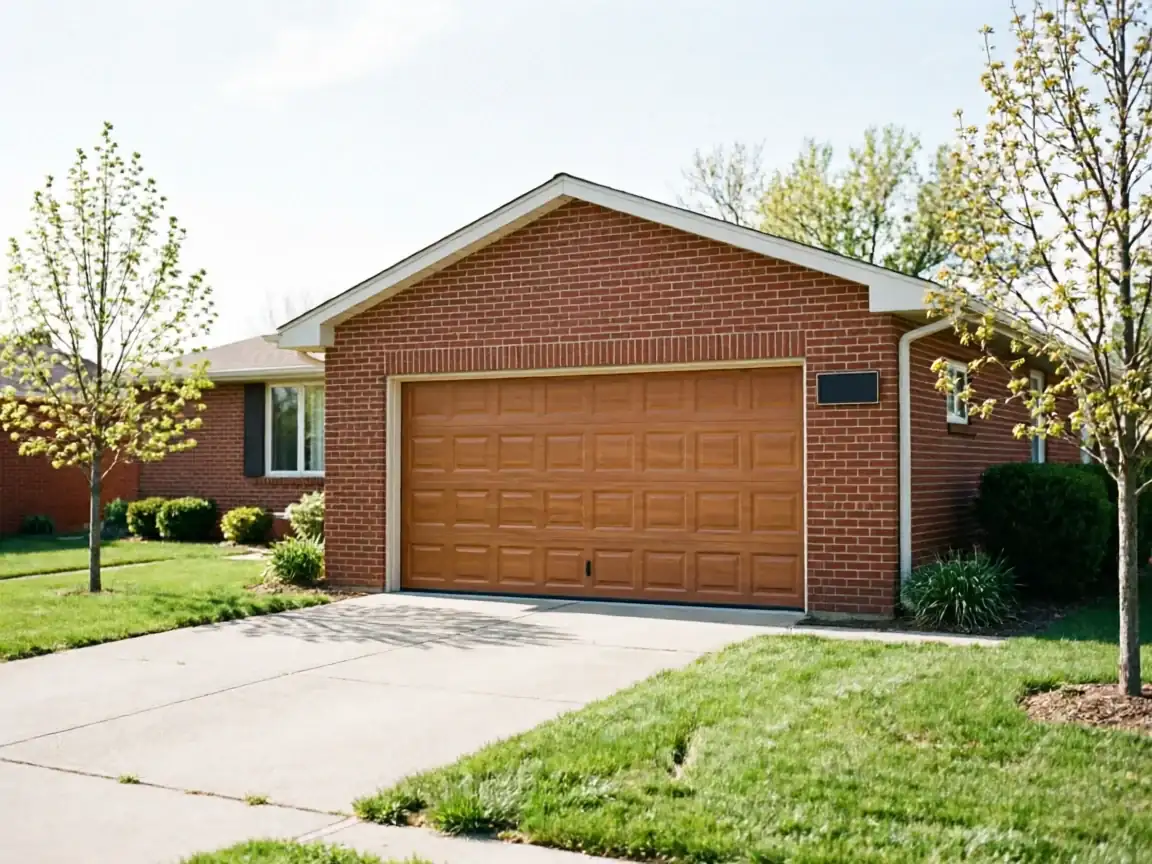
Champaign's housing stock spans 1956 to 2000, a long stretch that covers several generations of door hardware. Monticello doesn't spread that wide - its homes cluster around 1976, which means the garage doors here were largely built to one era's standard, not several. That matters because a spring, track, or opener sized for a mid-1970s door frame doesn't always match what's sold off the shelf today. A door that looks like a simple fix on paper can turn into a hunt for a torsion spring wound to a size nobody stocks locally anymore. The area also sits in a cold-moderate climate band, and forty-plus years of winter cycling on original steel hardware is a different story than ten or fifteen years of it. Houses built after 2000 elsewhere in the service area haven't put their springs through nearly as many freeze-thaw cycles. In Monticello, the age of the stock and the climate work on the same hardware at the same time, which is why a door here can fail in a way that looks routine until you're standing in front of it with the wrong replacement part in hand.
How We Fix It
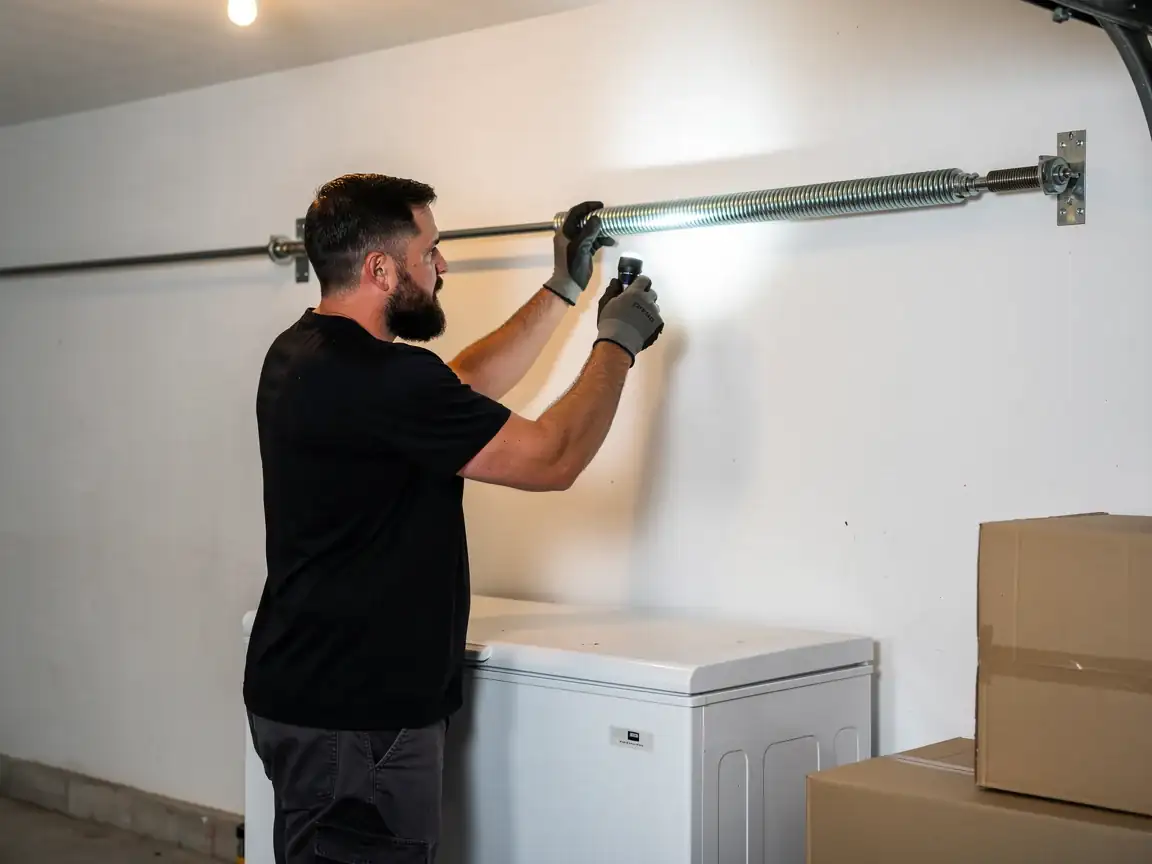
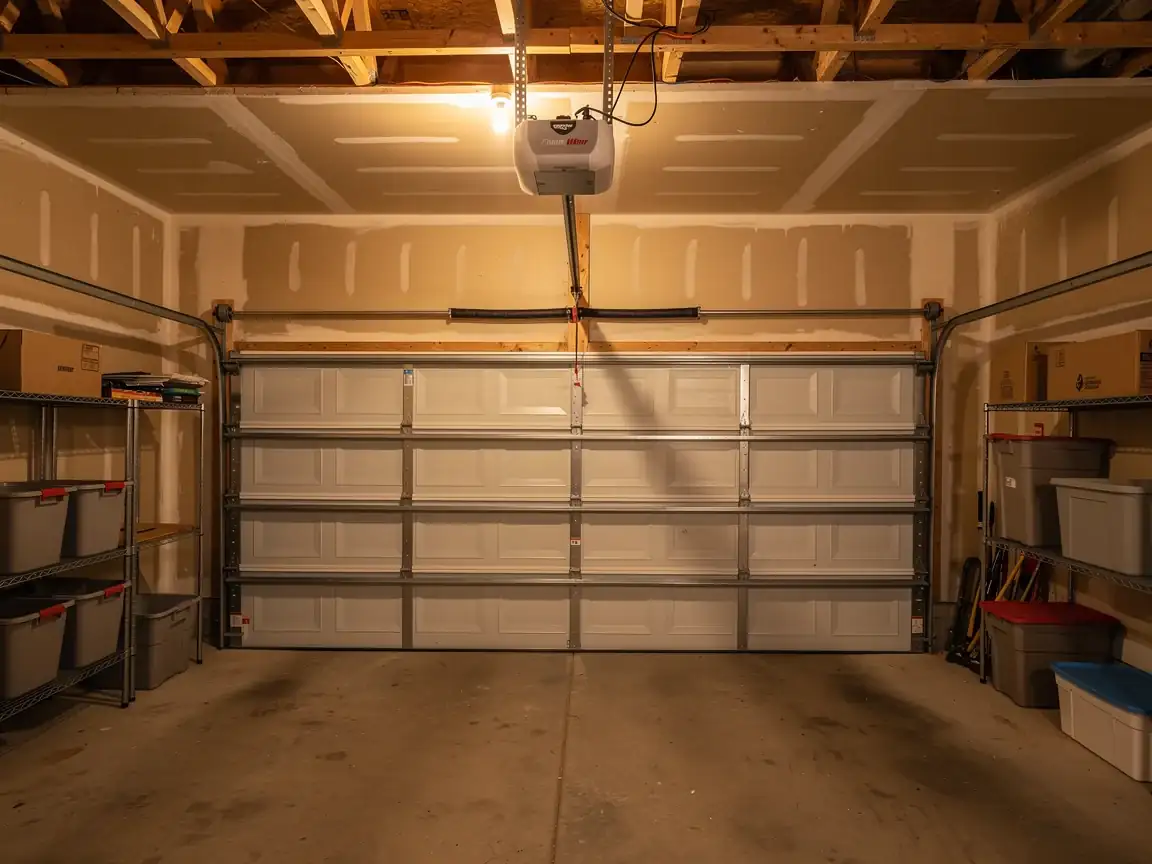
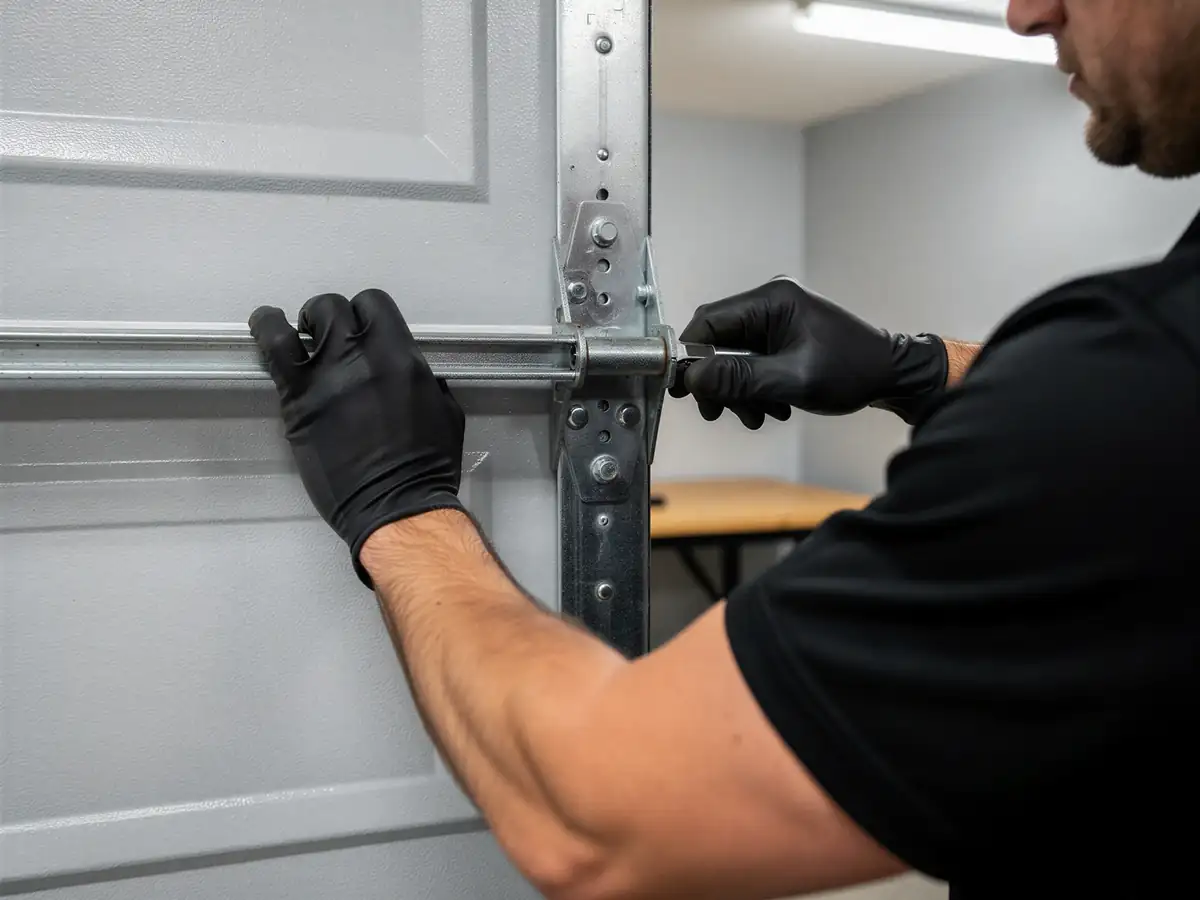
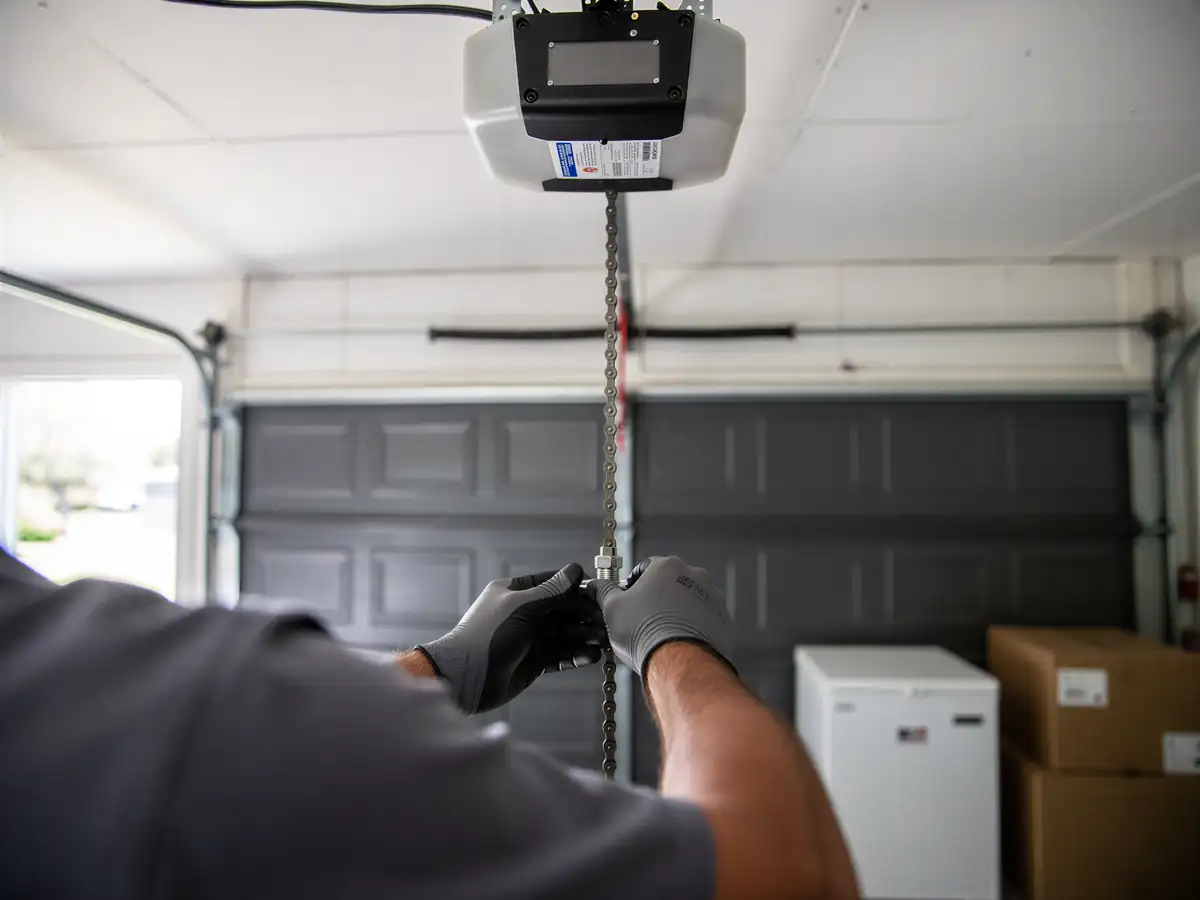
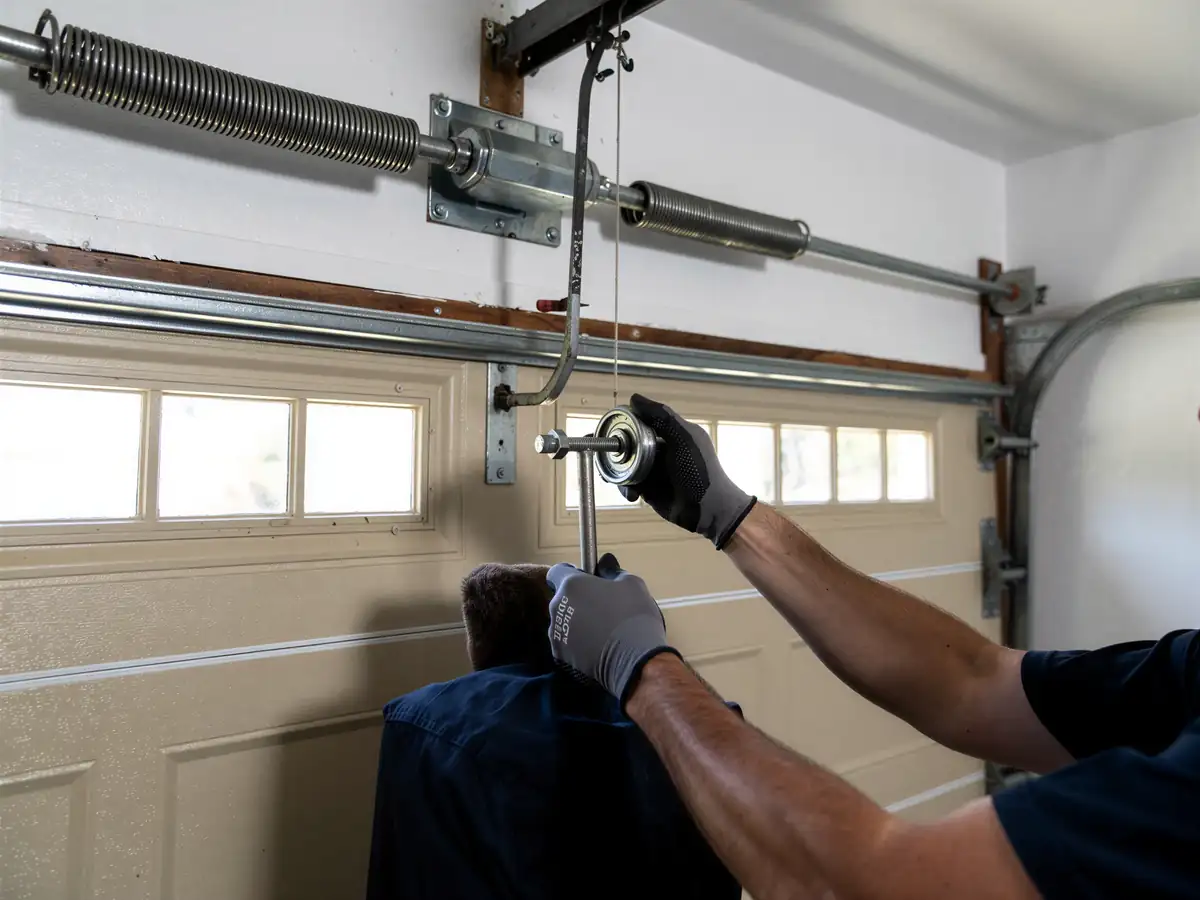
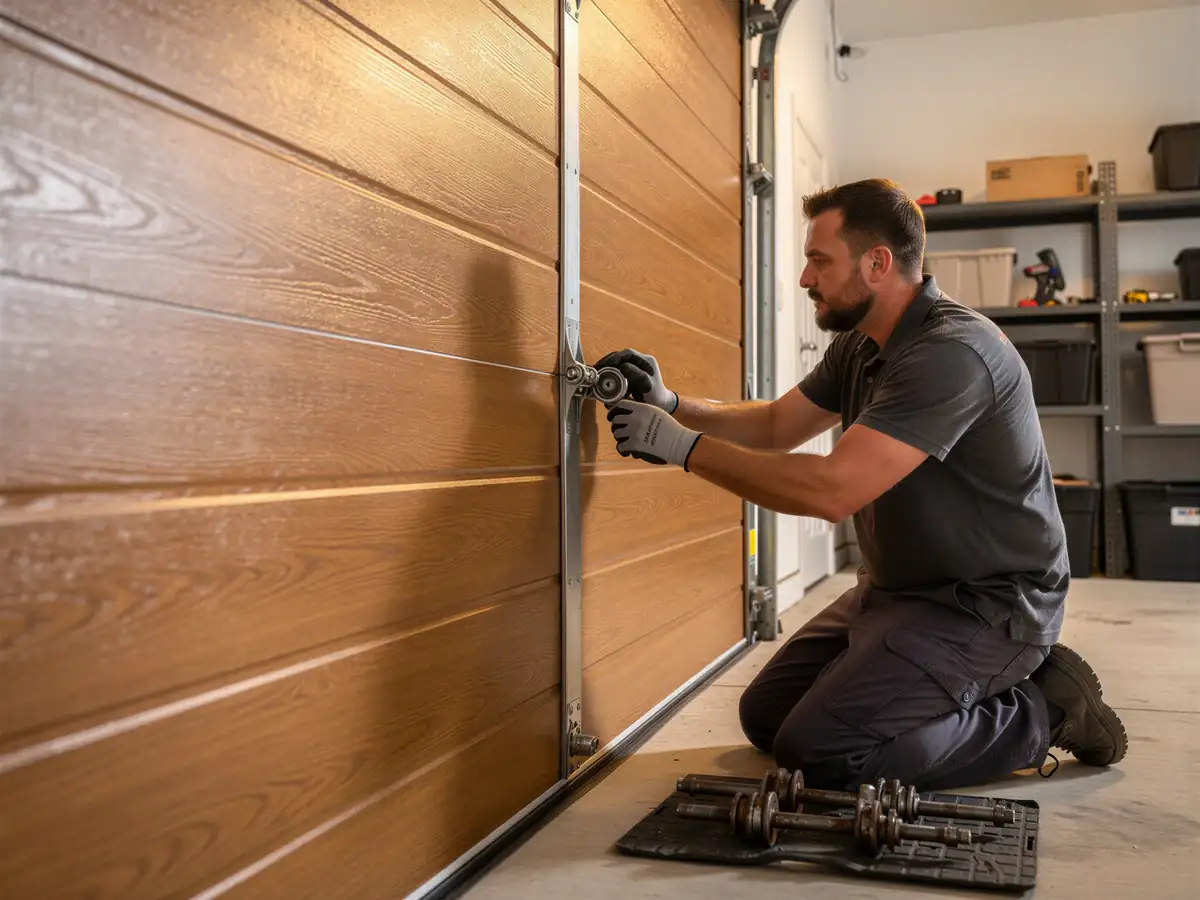
For a sagging door on uneven springs, the fix is a matched pair sized to the actual door weight, not a generic off-the-shelf spring that's close enough. We measure the door and wind the new springs to spec rather than guessing from the old wind count, since a spring that's been fatigued for years doesn't tell you its original size reliably. Worn steel rollers get swapped for nylon, which handles the cold-climate cycling better over the next few decades than the originals did. Where the opener itself is the problem - not the spring, not the track, but a mechanical drive system from the original build - we're honest that repair often isn't the right call. Parts for a chain-drive unit that old are scarce enough that a straight swap to a current opener usually costs less in time and headache than chasing obsolete components. That's the one limitation worth saying plainly: we don't pretend every original Monticello-era opener is worth saving. Sometimes the right fix is replacing it rather than nursing it along, and we'll tell you that instead of running up a bill on a dying unit.
The Symptom
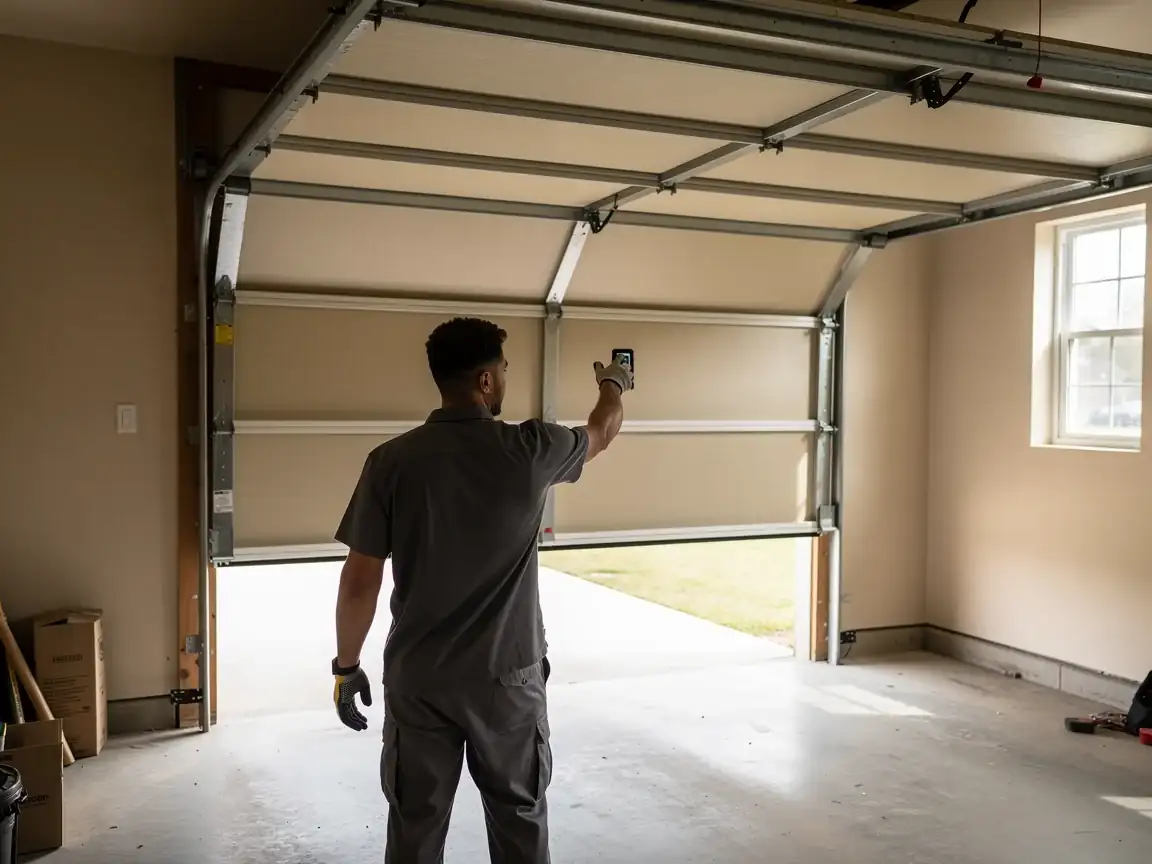
The call we get most from this side of the area describes the same thing a few different ways: the door is heavier than it used to be, or it hesitates halfway, or the opener motor sounds like it's working harder than it should for a door that used to go up without a fuss. That's the signature of a torsion spring losing its wind over decades of cold-climate use on a house built in the mid-1970s - the opener is compensating for weight the spring should be carrying, and it's winning that fight less each month. Sometimes it shows up as a louder close than it used to be, from rollers that have worn out of round on original steel track hardware. Less often, it's an opener that simply stops responding to the remote but still hums when you flip the wall switch - a sign the motor's drive mechanism, not the electronics, has reached the end of its run. Any of these on a house from that era point to original hardware finally giving out rather than a fresh, unrelated problem.