What Can Go Wrong
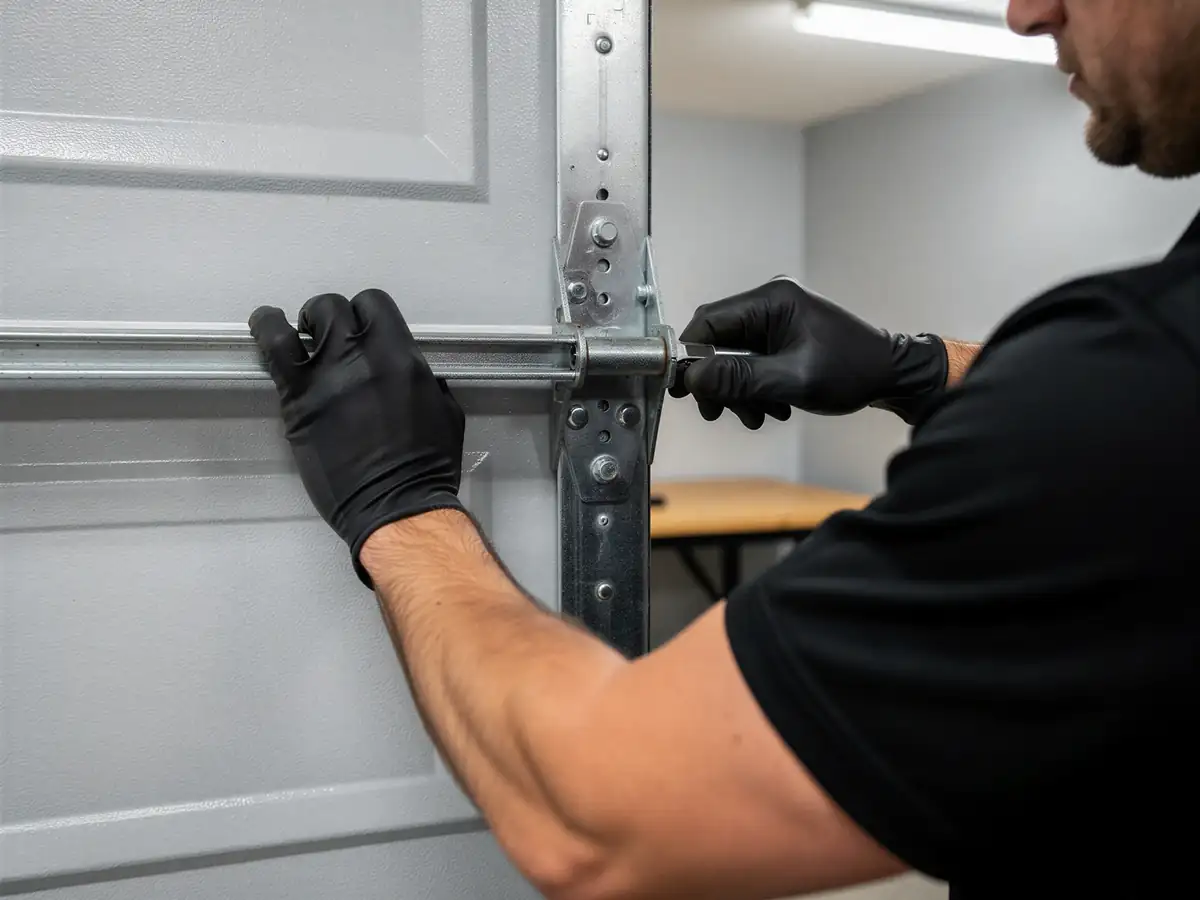
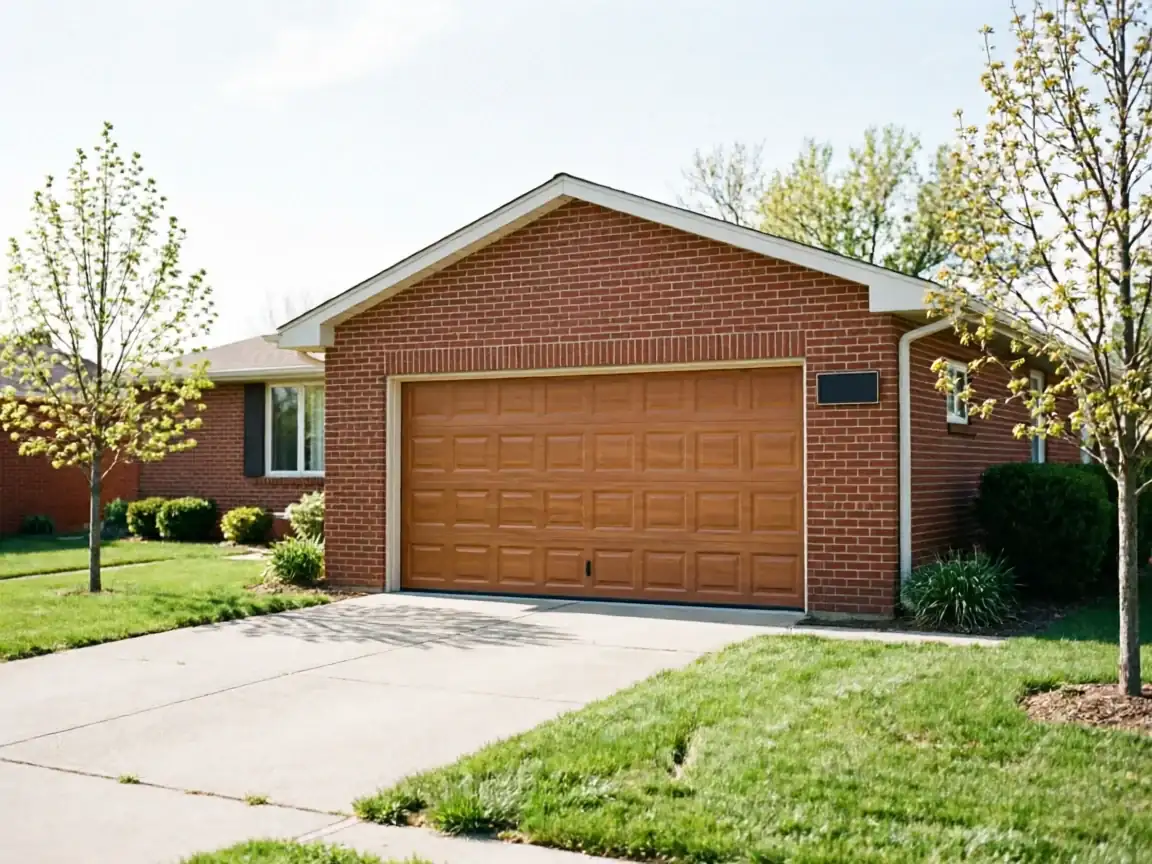
Savoy's housing stock runs newer than most of the surrounding service area - the typical house here went up around 1995, a good fifteen to twenty years past the 1978 median you'd find on the Champaign side of things. That matters for rollers because doors built in the mid-90s almost always shipped with 7-ball or 10-ball steel rollers on stamped track, not the older galvanized track and plain steel wheels you'd find on a 1960s build. Steel rollers wear differently: the bearings dry out, the balls flat-spot, and you get a grinding or clunking sound instead of the smoother rattle you'd hear from an older nylon setup losing its roller face. On a 1995-era door, the usual failure is a bearing seizing inside the roller stem, which then chews a groove into the track wall. Left alone, that groove gets wider every cycle and eventually the door binds or jumps the track entirely. We also see cracked nylon rollers on doors where someone upgraded parts over the years - mixed hardware generations on the same track, which is common once a door's been serviced once or twice since the mid-90s.
Time on the Job
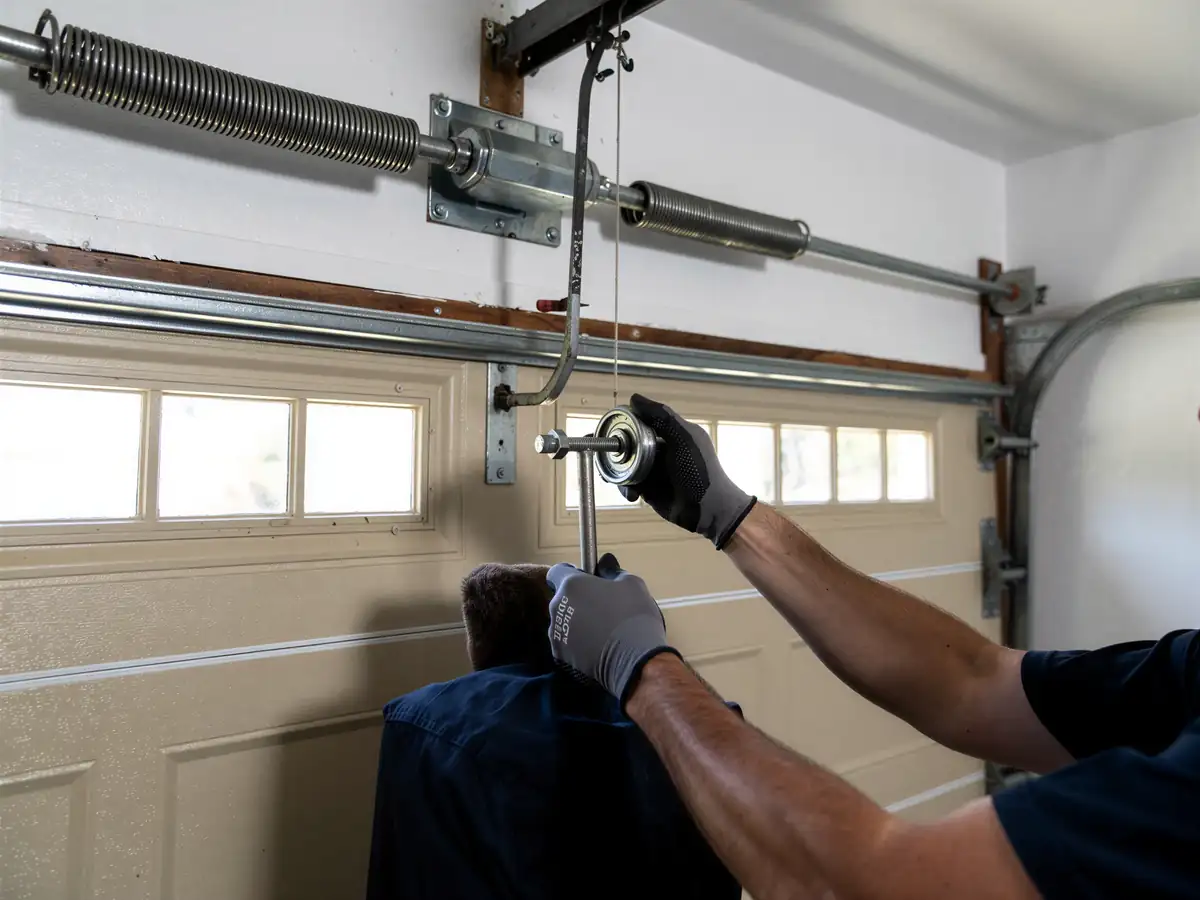
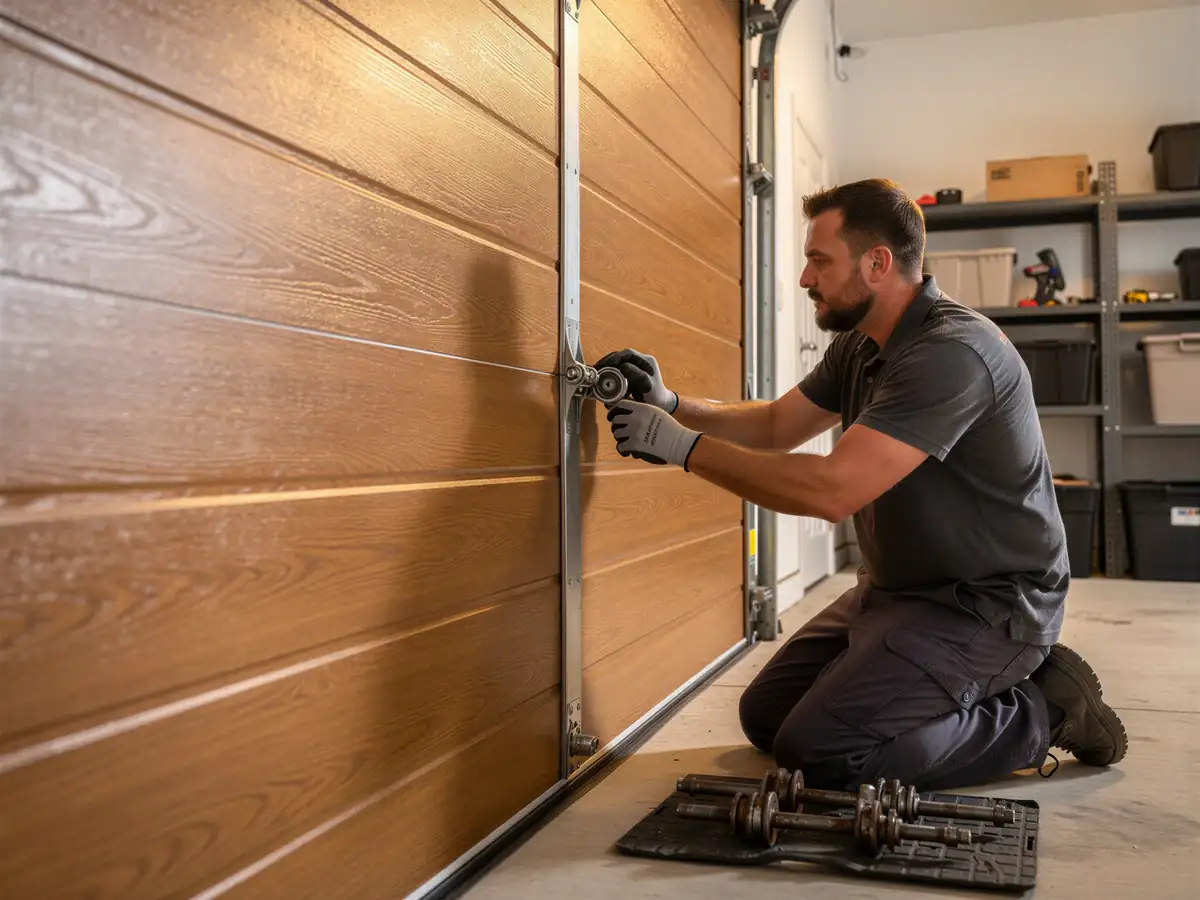
A straight roller swap on a standard double or single door, all rollers at once, is a same-visit job - we're not waiting on anything unusual for stock steel or nylon rollers sized for doors from this era. Where it runs longer is if the track itself has worn a groove from a seized bearing, which means straightening or replacing a section of track before new rollers will ride smoothly. We check the track wall on every roller job for exactly that reason, because swapping rollers onto bent or gouged track just buys you another call in a few months.
Stocked Parts
We carry 7-ball and 10-ball steel rollers and sealed-bearing nylon rollers on the truck, which covers the great majority of doors from the mid-90s build era you'll find around Savoy. Stem lengths vary by door weight and track depth, so we bring a range rather than one size. What we don't carry on the truck is specialty or oversized commercial rollers - those get ordered in, which means a short wait rather than a same-day fix if that's what your door needs. It's a rare call in a residential area like this, but it happens on heavier insulated doors.
The Symptom
If your door makes a sharp grinding or clicking noise as it travels, especially worse at the same spot every cycle, that's usually a roller bearing going out, not a spring or opener problem. A door that shudders or jumps slightly in the track partway through its travel is often a roller that's already flat-spotted or a track groove from one that failed a while back. Noise that's uniform the whole way up, more of a rattle, points more toward loose hardware than a roller itself - worth mentioning because not every noisy door needs new rollers, and we'll tell you if that's the case rather than replacing parts that aren't the problem.